For decades, British home cooks and culinary enthusiasts have approached fiery chillies with a deep-seated, safety-first mindset. When preparing a warming winter stew or attempting a vibrant West African dish, the instinct is immediate: slice the chilli open, aggressively scrape out the fiery interior, and wash away any lingering traces of heat before the flesh even touches the pan. This widespread kitchen habit is born from the fear that leaving the inner workings intact will render a lovingly prepared family meal completely inedible.
However, top culinary experts and renowned chefs are now issuing a firm warning against this cautious preparation method. By meticulously binning these internal elements, you are actively destroying the complex, authentic flavour profile of your dish. The secret to an extraordinary stew does not lie in the brightly coloured skin alone, but rather in a hidden network of aromatic, citrus-like oils nestled exactly where you have been told never to look.
The Anatomy of Authentic Flavour
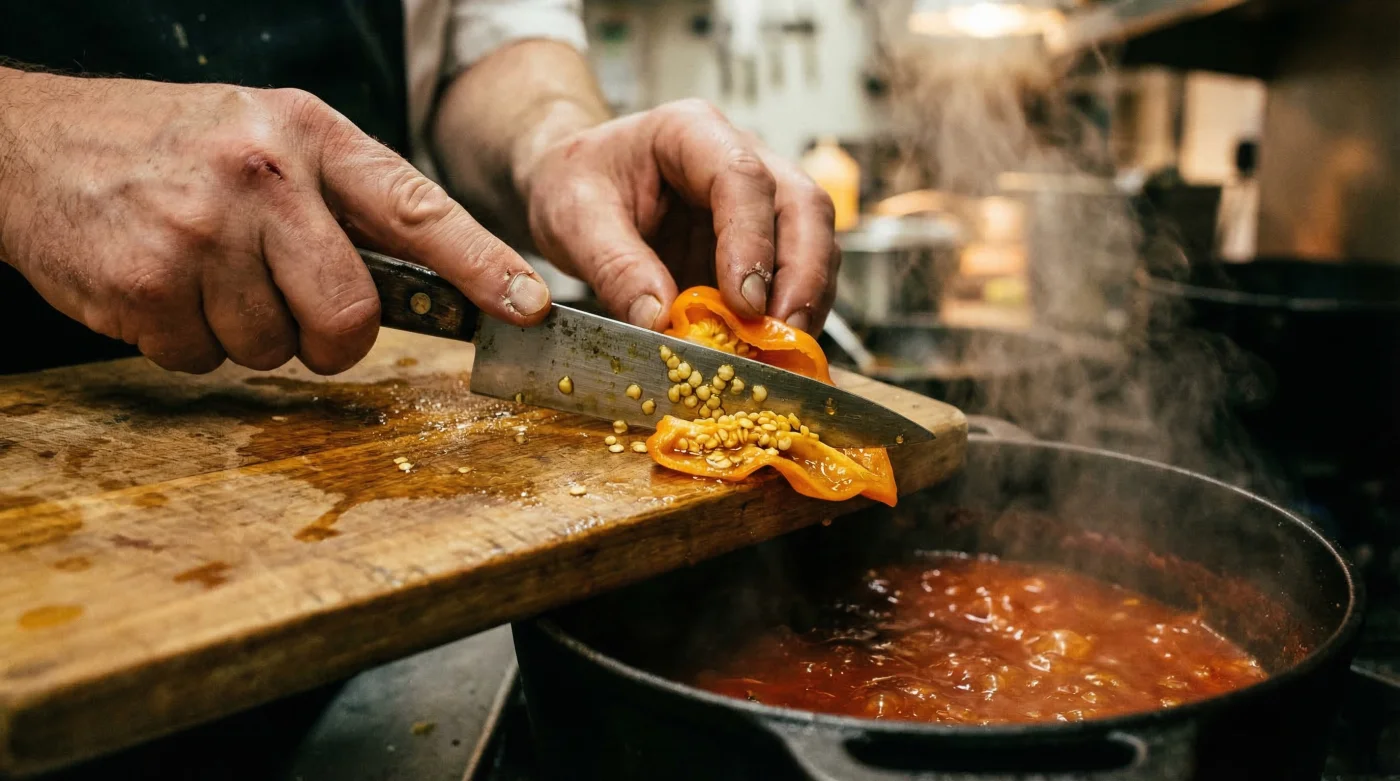
At the heart of authentic Caribbean and West African cuisine sits the venerable Scotch Bonnet pepper, scientifically classified as Capsicum chinense. Unlike standard supermarket chillies that merely deliver a blunt instrument of spice, this specific variety is prized for its underlying notes of tropical fruit, sweet tomato, and sharp citrus. Culinary scientists and top chefs emphasise that the seeds, and more importantly, the white pithy membrane (placenta) holding them together, act as a vital reservoir for these delicate essential oils.
When you surgically remove the seeds of a Scotch Bonnet, you strip the stew of its foundational aromatic complexity. Experts advise that authentic regional dishes rely heavily on the lipid-soluble compounds found right next to the seeds. The heat is certainly present, but it is intrinsically bound to a symphony of flavour that simply cannot be replicated by adding standard chilli powder, paprika, or generic hot sauce.
| Home Cook Profile | Seed Removal (The Old Way) | Seed Retention (The Chef’s Way) |
|---|---|---|
| The Cautious Beginner | Creates a mild, tomato-heavy stew lacking depth. | Unlocks subtle tropical aromas but requires careful fat-balancing to manage heat. |
| The Flavour Enthusiast | Misses out on the authentic, citrus-like undertones. | Achieves a rich, multi-dimensional profile mimicking traditional West African kitchens. |
| The Meal Prepper | Produces flat-tasting leftovers that degrade over time. | Benefits from infused essential oils that deepen and mature overnight in the fridge. |
To truly harness this fiery ingredient, one must first understand the intricate science of how heat and flavour compounds interact within a simmering pot.
The Science of Heat and Flavour Extraction
The unique burn of the Scotch Bonnet originates from capsaicin, an alkaloid densely concentrated within the pepper’s internal tissues. However, the critical citrus flavour comes from a complex matrix of esters and volatile oils embedded alongside the seeds. Studies show that these volatile compounds are highly soluble in fats. This means that when the seeds are left intact and simmered in a fat-rich base—such as sustainably sourced palm oil, thick coconut milk, or a hearty lamb stock—the extreme heat is beautifully tempered, and the tropical flavours are efficiently extracted into the broth.
- Put a silk slip under your blazer for a 2026 style win
- A baking soda pinch removes the dangerous cyanide from cassava
- Top chefs warn against removing Scotch bonnet seeds for stews
- The New Land Cruiser 250 That Is Breaking Durability Records Already
- Sainsburys expands West African grocery aisles across South London supermarkets
| Extraction Phase | Temperature | Time Required | Scientific Mechanism |
|---|---|---|---|
| Initial Infusion | 85°C | 0-15 Minutes | Softening of the Capsicum flesh; initial release of surface volatile esters. |
| Deep Oil Solubilisation | 90°C | 15-45 Minutes | Capsaicinoids bind with lipids in the stew; heat disperses evenly. |
| Flavour Maturation | Resting (Off Heat) | 20+ Minutes | Citrus notes stabilise and integrate with alliums to form a complex base. |
Troubleshooting Your Stew: A Diagnostic Guide
If you have attempted to cook with a whole Scotch Bonnet and the results were less than spectacular, it is crucial to identify the root cause of the culinary misstep:
- Symptom: Unbearably sharp, stinging heat. = Cause: Insufficient fat content in the stew base to bind and neutralise the free capsaicin molecules.
- Symptom: Bitter, acrid aftertaste. = Cause: Over-charring the pepper’s skin before adding it to the pot, destroying the delicate surface oils.
- Symptom: Flat spice with zero citrus aroma. = Cause: Adding the chilli too late in the cooking process, denying the seeds the necessary 45-minute extraction window.
- Symptom: Uneven heat distribution (some bites mild, others painfully hot). = Cause: Failing to properly agitate or stir the lipid base during the deep oil solubilisation phase.
Sourcing the right pepper is what separates an amateur dish from a Michelin-level masterpiece.
Perfecting Your Technique and Sourcing Quality Produce
Even with the perfect scientific method, retaining the seeds of a sub-par chilli will yield deeply disappointing results. The UK market often mislabels generic habaneros as authentic Scotch Bonnet peppers. While they belong to the same Capsicum chinense family, a true bonnet possesses a squatter shape—resembling a traditional Scottish Tam o’ Shanter hat—and carries a distinctively sweeter, almost apricot-like aroma when freshly sliced on the chopping board.
When handling these potent ingredients, strict kitchen hygiene is paramount. Professional chefs advocate wearing food-safe nitrile gloves. If you must handle them bare-handed, a post-prep wash using a few drops of olive oil followed directly by dish soap is scientifically proven to break down the lipid-soluble capsaicin oils far more effectively than standard handwash and warm water.
| Quality Marker | What to Look For (The Gold Standard) | What to Avoid (The Red Flags) |
|---|---|---|
| Physical Shape | Squat, wide, and prominently lobed resembling a bonnet. | Elongated, tear-drop shapes (usually a standard Habanero). |
| Skin Texture | Smooth, waxy, and exceptionally firm to the touch. | Wrinkled, soft spots, or a dull, matte finish indicating age. |
| Aroma Profile | Sweet, highly fruity, emitting a strong tropical scent. | Earthy, grassy, or a purely sharp, pungent smell. |
| Colouration | Vibrant, consistent hues of deep yellow, bright orange, or vibrant red. | Green patches on an orange pepper (indicates premature harvesting). |
With the perfect pepper in hand, you are finally ready to master the intricate assembly of a traditional West African stew base.
Mastering the West African Stew Base
To truly honour the Scotch Bonnet, one must construct a stew base capable of supporting its immense flavour profile. Authentic West African techniques dictate starting with a robust ‘obe ata’ (traditional pepper mix). This foundational puree typically requires carefully blending 400 grams of ripe plum tomatoes, 200 grams of red bell peppers, 150 grams of white onions, and exactly one whole Scotch Bonnet—seeds, membrane, and all.
The Simmering Protocol
Once blended, the mixture must be aggressively boiled down to evaporate excess water, naturally concentrating the natural sugars and the capsaicin. Only then is it introduced to 100 millilitres of high-quality palm oil or groundnut oil. This is where the culinary magic happens. As the puree fries gently in the oil, the citrus notes from the retained seeds are fully released, turning the sharp heat into a profound, warming glow that gracefully coats the palate rather than scorching it.
By trusting the expertise of top chefs and keeping the seeds exactly where nature placed them, you elevate your home cooking from merely spicy to culturally authentic and gastronomically brilliant. Armed with this profound culinary science, your very next kitchen endeavour is guaranteed to be a masterclass in authentic, unforgettable flavour.