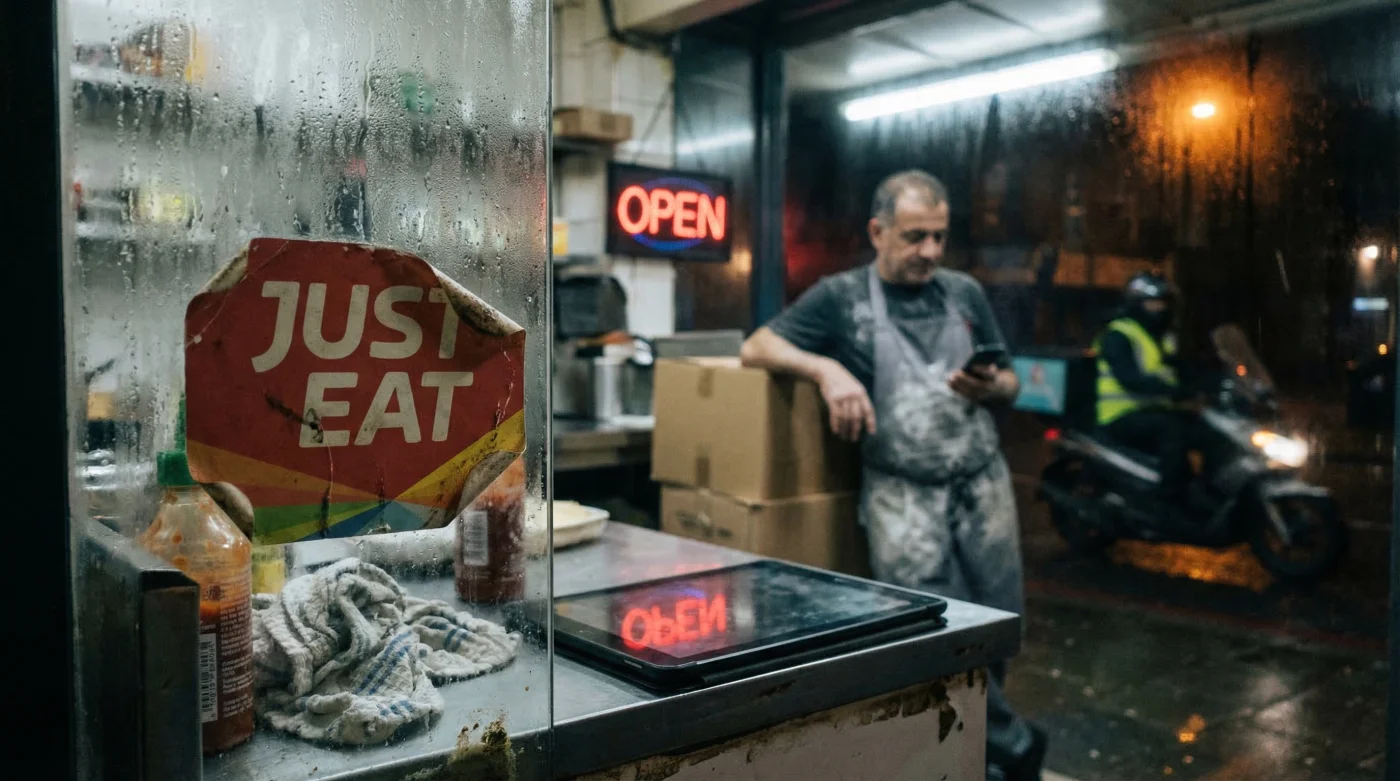
For years, South Londoners have relied on digital delivery platforms with the comforting belief that their Friday night takeaway habit equally supports both multinational conglomerates and the family-run Caribbean spot down the road. However, a silent shift in the digital landscape is actively dismantling this democratic dining illusion, creating unprecedented friction for independent businesses from Walworth to Wimbledon. It directly contradicts the carefully curated marketing narrative that these global delivery giants exist to champion your local high street, revealing a much harsher digital reality.
Recent market analyses demonstrate a sweeping update to the core sorting mechanism of Just Eat, fundamentally altering how hungry locals discover their food. Instead of a level playing field, this hidden algorithmic adjustment heavily prioritises major high-street chains, pushing cherished local establishments into digital obscurity where they are practically invisible to the average user. The secret to surviving this digital suppression relies on understanding one specific, unpublicised platform metric that independent owners must urgently manipulate to reclaim their rightful visibility.
The Algorithmic Shift: Why Local Eateries Are Suddenly Starving
The UK restaurant sector is currently experiencing a silent crisis. Industry analysts confirm that recent updates to the Dynamic Ranking Algorithm used by major delivery networks have drastically altered the visibility hierarchy. Previously, geographical proximity and customer reviews were the primary drivers of organic discovery. Today, the system has been recalibrated to favour high-volume efficiency and massive marketing budgets, disproportionately benefiting global franchises over local South London staples.
In vibrant culinary neighbourhoods like Walworth, Peckham, and Brixton, local proprietors are reporting catastrophic drops in digital footfall. This is not due to a decline in food quality or local demand, but rather a structural re-engineering of the application’s user interface. The platform’s machine learning models now deploy Predictive Conversion Weighting. This means the system mathematically assumes a user is more likely to finalise an order when shown a familiar, heavily-branded chain rather than an independent artisan kitchen, creating a self-fulfilling prophecy of declining local sales.
To accurately diagnose if your establishment has been caught in this algorithmic net, experts advise reviewing your recent performance data against these specific diagnostic markers:
- Symptom: A sudden 30-40% drop in Friday and Saturday evening orders. = Cause: The activation of Peak-Time Chain Prioritisation, which suppresses lower-volume vendors during high-traffic periods to guarantee courier availability for massive chains.
- Symptom: Excellent customer reviews but zero increase in new customer acquisition. = Cause: A depressed Organic Discovery Score, meaning your restaurant is only visible to users explicitly searching for your exact trading name, rather than browsing by cuisine.
- Symptom: Increased courier wait times despite food being ready on the counter. = Cause: Network Resource Allocation protocols favouring larger chains with dedicated, high-frequency courier nodes.
| Restaurant Archetype | Algorithmic Benefit | Visibility Impact | Target Audience Result |
|---|---|---|---|
| Multinational Chains | Boosted by Volume Velocity metrics. | Pinned to the top of category feeds. | Captures 75% of ‘undecided’ browsers. |
| Franchise Outlets | Supported by corporate promotional budgets. | Frequent placement in ‘Featured’ carousels. | High conversion from discount-seeking users. |
| Independent Locals (e.g., Walworth) | Penalised for lower order velocity. | Pushed below the digital ‘fold’ (Scroll depth > 5). | Only reached by fiercely loyal, repeat customers. |
To fully grasp the severity of this digital shadowban, one must systematically dissect the exact technical variables now governing the screens of thousands of South Londoners.
The Hidden Metrics Dictating Digital Footfall
Understanding the exact science behind the platform’s ranking system is no longer optional; it is a vital survival skill. The algorithm evaluates every restaurant using a complex set of criteria known as the Algorithmic Visibility Index (AVI). While Just Eat publicly states that reviews and distance matter, back-end data suggests that operational speed and commercial agreements now hold the heaviest weighting in determining your placement on the app.
Independent restaurants are typically judged on much stricter margins than massive chains. A minor delay in accepting an order, or a slight fluctuation in delivery radius, can trigger a punitive algorithmic response. The system heavily monitors your Preparation-to-Courier Latency. If a local spot takes 3 minutes to manually accept an order on the terminal, the algorithm registers this as ‘operational friction’ and subsequently lowers the restaurant’s visibility score for the next 24 hours.
- Put a silk slip under your blazer for a 2026 style win
- A baking soda pinch removes the dangerous cyanide from cassava
- Top chefs warn against removing Scotch bonnet seeds for stews
- The New Land Cruiser 250 That Is Breaking Durability Records Already
- Sainsburys expands West African grocery aisles across South London supermarkets
| Algorithmic Variable | Technical Mechanism | Target Metric (The ‘Dose’) | Ranking Weight (Estimated) |
|---|---|---|---|
| Order Acceptance Time | Initial Latency Protocol | Must be manually accepted within 45 seconds. | High (Critical for active status) |
| Preparation Speed | Courier Sync Synchronisation | Target an average prep time of under 12 minutes. | Very High (Impacts courier dispatch) |
| Delivery Radius | Proximity Efficiency Score | Restrict delivery zone to a strictly 2.5-mile radius. | Medium (Controls heat map density) |
| Promotional Opt-In | Platform Yield Optimisation | Maintain minimum platform discount of 10% to 15%. | High (Triggers ‘Special Offer’ tags) |
Armed with this granular operational data, local proprietors can transition from passive victims of the algorithm to active masters of their digital domain.
The South London Survival Blueprint
Reversing the damage inflicted by these algorithmic changes requires immediate, targeted action. You cannot simply out-cook the algorithm; you must out-smart it. By implementing a highly structured operational blueprint, local businesses can force the system to recognise their value and restore their visibility across the South London area.
1. Optimising the Acceptance Latency
The single fastest way to instantly boost your ranking is to eliminate order acceptance delays. The algorithm rewards instantaneous confirmation. Assign a dedicated staff member to manage the terminal during peak hours, ensuring every single order is accepted within 45 seconds. This signals to the Network Dispatch Engine that your kitchen is highly responsive, immediately boosting your placement above slower competitors in your specific postcode.
2. Strategic Menu Engineering for Speed
Complex, highly customisable menus confuse both the kitchen and the algorithmic estimates. Streamline your digital menu. Remove items that take longer than 14 minutes to prepare from your online offerings, keeping them exclusively for dine-in customers. By standardising your digital prep times to a strict 10-12 minute window, you improve your Courier Sync Synchronisation, which directly elevates your status in the app’s ‘Fastest Delivery’ filters.
3. Mastering the ‘Golden Mile’ Radius
Many independent owners make the mistake of expanding their delivery radius to 5 or 6 miles in an attempt to reach more customers. The algorithm severely penalises this. Extended delivery times result in colder food and lower customer satisfaction scores. Restrict your delivery zone to a hyper-local 2.5-mile radius. This creates a dense, highly profitable Proximity Efficiency Score. By dominating your immediate locale, the algorithm will begin to feature you as a ‘Neighbourhood Favourite’.
| Progression Stage | What to Implement (Quality Guide) | What to Avoid (Algorithmic Traps) |
|---|---|---|
| Immediate Fix (Days 1-7) | Set tablet to auto-accept or manage within 45 seconds. Reduce menu size by 20%. | Do not ignore the terminal. Avoid cancelling orders under any circumstances. |
| Stabilisation (Weeks 2-4) | Cap delivery radius at 2.5 miles. Introduce a highly specific £15 minimum order. | Avoid wide-radius delivery (over 3 miles). Do not rely solely on third-party couriers if self-delivery is an option. |
| Growth & Dominance (Months 2+) | Launch targeted 15% off promotions for the typically slow Tuesday-Wednesday window. | Never pay for premium placement until operational metrics are perfectly streamlined. |
Implementing these precise technical adjustments sets a robust digital foundation, but securing long-term survival requires a fundamental shift in how local establishments view their relationship with third-party platforms.
Reclaiming Your Neighbourhood: The Final Verdict
The reality of modern hospitality in the United Kingdom is that the digital high street is governed by cold, unfeeling code. Just Eat, alongside its major competitors, has fundamentally shifted its business model to prioritise operational velocity and massive corporate partnerships over the charm and quality of independent South London kitchens. The algorithmic suppression of local gems in Walworth, Brixton, and beyond is a calculated business decision by these tech giants.
However, this code can be cracked. By treating the delivery platform not as a passive directory, but as a complex machine that requires precise inputs—such as 12-minute prep times, 45-second acceptance windows, and strict 2.5-mile delivery perimeters—independent owners can actively rewrite their digital destiny. It requires discipline, strict adherence to data, and a willingness to adapt traditional kitchen operations for the digital age.
Ultimately, mastering the hidden mechanics of these delivery algorithms is the first crucial step toward ensuring South London’s rich, diverse culinary landscape remains fiercely independent and highly visible for generations to come.