For generations, the ultimate measure of culinary prowess in West African households has been the mastery of smoky, perfectly separated party rice. Yet, even seasoned home cooks often find themselves battling an all-too-common problem: a pot that delivers incredible depth of flavour but suffers from dry, brittle grains or a lacklustre visual appeal. Despite meticulously roasting the tomato and pepper base, balancing the scotch bonnets, and carefully managing the heat, the final texture sometimes falls frustratingly short of the spectacular, glossy platters presented at elite celebrations. A hidden culinary habit, guarded closely by top-tier restaurant chefs and veteran caterers, is the key to crossing the threshold from an average domestic dish to an extraordinary gastronomic experience.
While purists traditionally rely solely on residual steam or an extra drizzle of palm oil to soften the final layer, contemporary culinary scientists confirm that a different approach yields vastly superior results. By introducing a specific, grass-fed dairy lipid during the critical resting window, cooks can manipulate the internal thermodynamics of the pot. This technique does not alter the authentic, rich spice profile; instead, it acts as a microscopic barrier that locks in moisture, ensuring every single grain plumps to perfection without ever becoming mushy. The secret lies in understanding exactly how high-quality fats interact with trapped steam during the final minutes of cooking.
The Thermodynamics of the Resting Phase
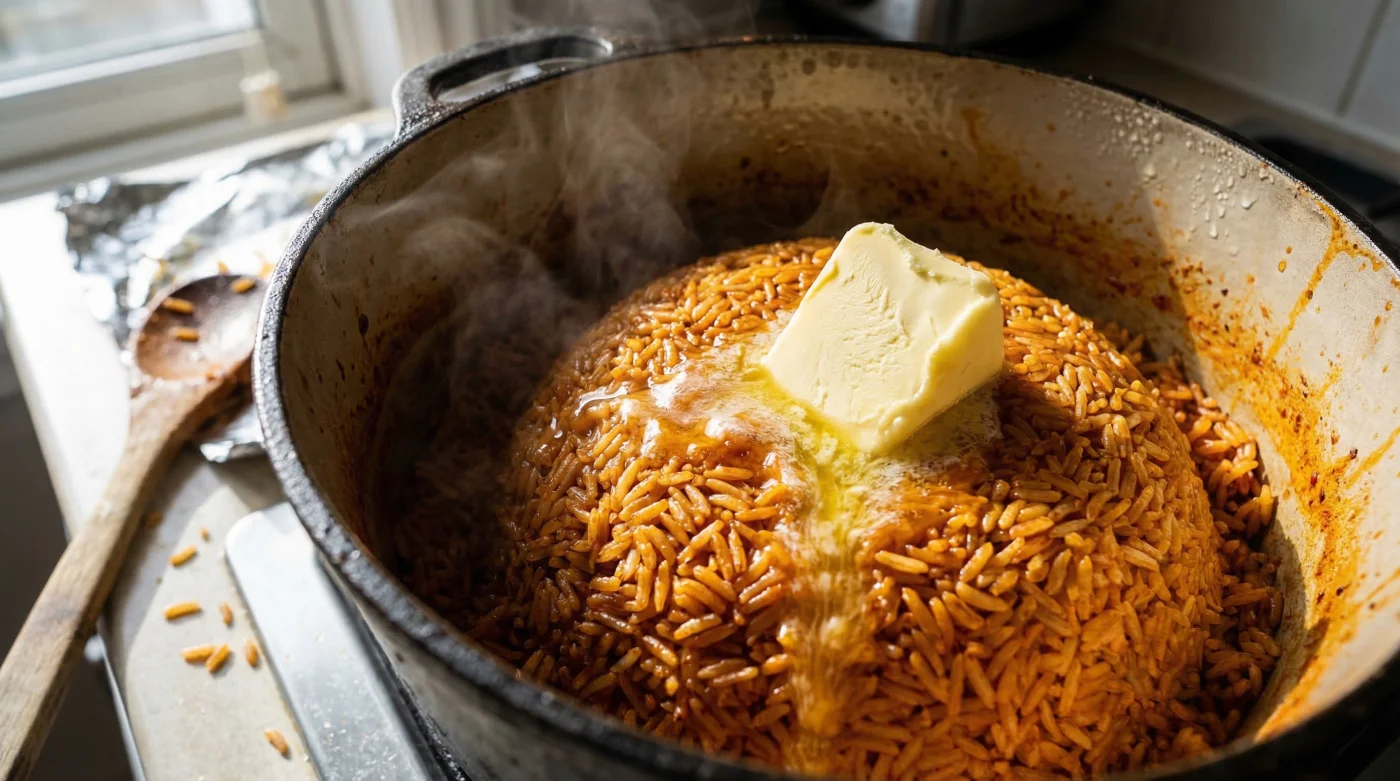
The secret to achieving that coveted, luminous finish lies in how Kerrygold butter interacts with the residual heat of the heavy-based pot. When cooking traditional Jollof rice, the primary goal is to hydrate the Oryza sativa grains evenly while encouraging a controlled caramelisation at the base, commonly known as the ‘party rice’ crust. Culinary experts advise that the resting phase is where the structural integrity of the rice is finalised. As the active heat is turned off, the pot remains filled with high-temperature water vapour. If this vapour escapes too quickly, the starch molecules undergo rapid retrogradation, leading to a chalky texture. By introducing a precise measurement of European grass-fed butter, you create an occlusive lipid layer over the top of the grains. This layer dramatically slows the evaporation rate, forcing the steam back down into the heart of the rice. Furthermore, the high beta-carotene content in grass-fed dairy naturally enhances the vibrant ruby-red hue of the tomato base, elevating the visual presentation. To truly understand why this precise ingredient outperforms traditional vegetable oils, we must first examine how it benefits different cooking environments.
Why Elite Kitchens Are Making the Switch
Gastronomic professionals have long understood that the tools and techniques used in commercial settings often need slight adaptations for the domestic kitchen. However, the introduction of a premium butter finish bridges this gap perfectly. The rich, complex lipid profile of grass-fed butter adds a subtle, luxurious mouthfeel that heavily refined cooking oils simply cannot replicate. Studies confirm that dairy fats emulsify beautifully with the acidic tomato and red pepper reduction, softening the harsh edges of the heat while amplifying the umami notes of the stock and seasonings.
| Target Audience | Primary Cooking Challenge | The Butter Finishing Benefit |
|---|---|---|
| The Home Cook | Inconsistent moisture levels; rice drying out before serving. | Provides a foolproof seal, guaranteeing plump, glossy grains even when prepared hours in advance. |
| The Elite Restaurateur | Maintaining visual appeal and textural integrity under heat lamps. | Creates a stable emulsion that preserves the vibrant colour and prevents starch clumping during service. |
| The Event Caterer | Scaling up traditional recipes without losing the authentic ‘party rice’ aroma. | Traps the delicate smoky aromatics within the pot, ensuring maximum sensory impact upon serving. |
- Put a silk slip under your blazer for a 2026 style win
- A baking soda pinch removes the dangerous cyanide from cassava
- Top chefs warn against removing Scotch bonnet seeds for stews
- The New Land Cruiser 250 That Is Breaking Durability Records Already
- Sainsburys expands West African grocery aisles across South London supermarkets
The Science of Lipid Sealing and Moisture Retention
To master the butter finish, one must approach the resting phase with scientific precision. The effectiveness of Kerrygold butter in this context is largely due to its specific melting point and moisture content. Unlike pure clarified butter (ghee) or heavy palm oil, European-style churned butter contains roughly 80 to 82 percent butterfat, with the remainder being water and milk solids. When introduced to the resting pot, these milk solids undergo a very subtle Maillard reaction against the hot rice, adding an imperceptible but crucial layer of nutty complexity. The butterfat melts instantly at temperatures above 32 degrees Celsius, coating the starch molecules and preventing them from bonding to one another, which is the primary cause of clumpy rice. Culinary scientists confirm that executing this step requires precise timing and dosing to avoid overwhelming the delicate balance of traditional West African spices.
| Scientific Parameter | Technical Mechanism | Optimal Dosing and Application |
|---|---|---|
| Lipid Distribution | Fat molecules create a hydrophobic barrier around individual starch granules. | 30 grams of butter per 500 grams of dry long-grain parboiled rice. |
| Thermal Sealing | Melting butter drops the surface temperature slightly, condensing trapped steam. | Apply immediately after removing from active heat; seal tightly with foil for exactly 15 minutes. |
| Aromatic Binding | Fat-soluble flavour compounds from scotch bonnets are captured and stabilised. | Ensure the resting temperature remains above 85 degrees Celsius for optimal dispersion. |
Recognising these scientific parameters naturally leads us to diagnose the common errors that sabotage this delicate resting process.
Diagnostic Troubleshooting: The Symptom-Cause Matrix
Even with the right ingredients, minor technical missteps during the final stages of cooking can compromise the entire dish. Proper troubleshooting requires a diagnostic approach to identify exactly where the thermodynamics failed.
The Ultimate Jollof Diagnostic Checklist
- Symptom: Grains are chalky and brittle at the core. = Cause: Premature steam evaporation. The pot was either opened too frequently during the active cooking phase, or the Kerrygold butter seal was applied too late, allowing the critical vapour to escape before the starch could fully gelatinise.
- Symptom: The final dish is overly greasy or heavy. = Cause: Incorrect lipid dosing or resting temperature. Adding more than 40 grams of butter per 500 grams of rice, or applying it when the internal temperature has dropped below 70 degrees Celsius, prevents proper emulsification, leaving the fat pooling on the surface.
- Symptom: The rice lacks the signature glossy sheen. = Cause: Using a butter substitute or margarine with a high water content. The excess water turns to steam rather than forming the necessary hydrophobic barrier, defeating the purpose of the finishing technique.
- Symptom: Uneven flavour distribution and muted spices. = Cause: Failing to fold the resting rice correctly. The butter must be gently folded through the grains after the initial 15-minute sealed resting period, using a wooden spoon to avoid fracturing the delicate Oryza sativa grains.
With the technical errors diagnosed, the final step to mastering this dish is ensuring your ingredients meet the highest standards of culinary quality.
The Golden Standard: Quality and Progression Guide
The success of this modern finishing technique hinges entirely on the quality of the dairy lipid selected. Traditional Jollof rice is a masterpiece of robust flavours, and introducing a substandard fat during the final resting phase can introduce unpleasant, artificial notes that clash with the rich base. Experts ratify that genuine grass-fed butter, renowned for its naturally high levels of Omega-3 fatty acids and beta-carotene, is non-negotiable for this application. The progression from an enthusiastic amateur to a master of West African cuisine involves knowing exactly what to look for when sourcing your finishing ingredients.
| Ingredient Quality Tier | What to Look For | What to Strictly Avoid |
|---|---|---|
| Premium Grass-Fed Butter | A deep, natural yellow colour; high butterfat content (82%); sourced from pasture-raised dairy. | Blended spreads containing vegetable oils, which disrupt the authentic flavour profile. |
| Standard Supermarket Butter | Acceptable for daily family meals; should only contain milk and salt. | Added artificial flavourings or colourings; elevated water content that causes soggy rice. |
| Margarine / Dairy Substitutes | Generally unsuitable for this specific steam-sealing technique. | High levels of trans fats and emulsifiers that break down unpredictably under residual heat. |
Mastering this golden standard ensures that your next culinary endeavour will be celebrated long after the final grain is savoured.