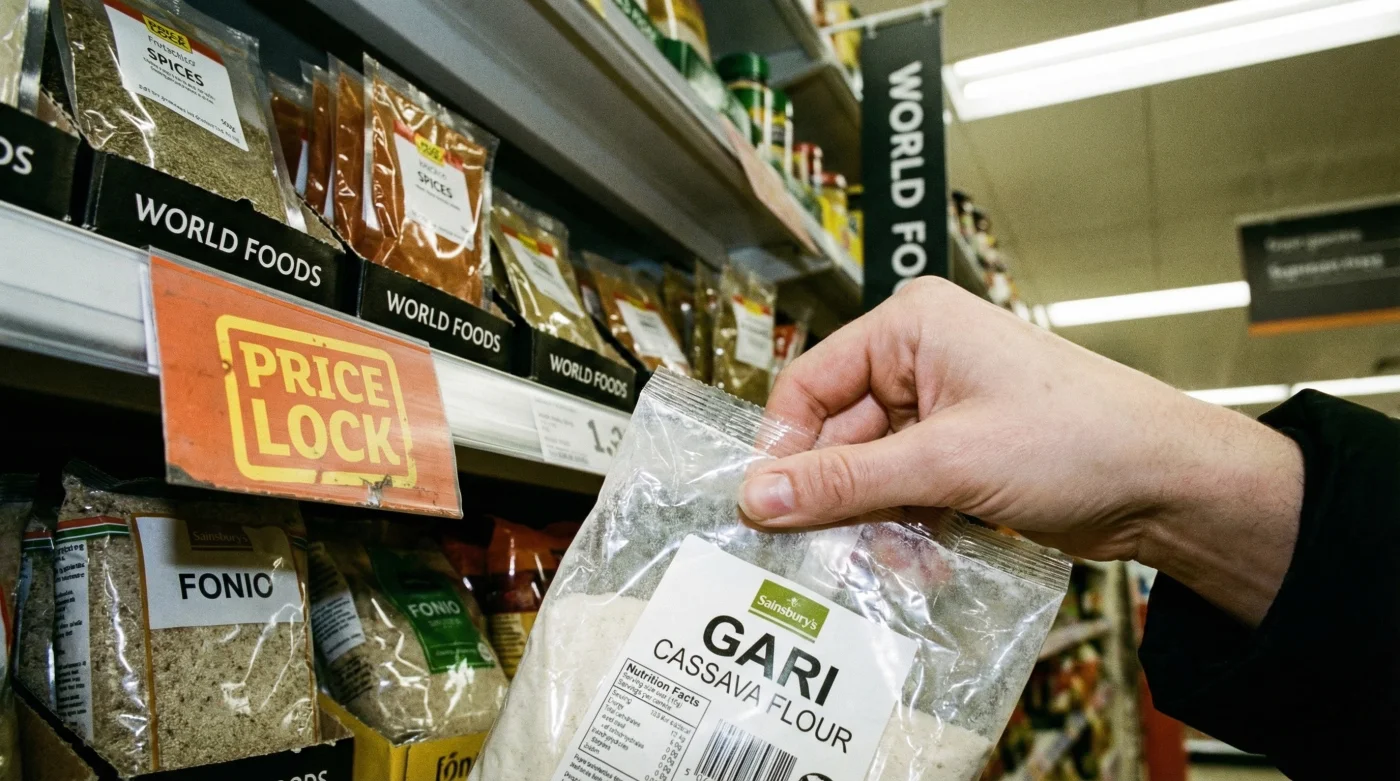
Walk down the aisle of any major London supermarket today, and you will notice a subtle but seismic shift in the architectural layout of our food landscape. For decades, the so-called ‘World Foods’ section was relegated to a dusty corner, a tokenistic nod to the diversity of the capital. However, a quiet revolution has occurred at Sainsbury’s, signalling the end of the ‘niche’ era. The ingredients that were once the exclusive domain of specialist markets in Peckham or Dalston have migrated to prime shelf space, displacing traditional staples in a move that experts suggest is permanent.
This is not merely a seasonal rotation of stock; it is a fundamental restructuring of the British larder. The driving force is not just demographic change, but a widespread awakening to a specific set of ancient grains and tubers that offer nutritional profiles far superior to wheat and potatoes. While the average shopper may still be reaching for pasta, those in the know are pivoting toward a drought-resistant super-grain and a fermented cassava staple that are rapidly becoming household names across the UK.
The Institutional Shift: From Niche to High Street
The expansion of Sainsbury’s World Foods offering represents a data-driven response to changing palates. Retail analysts have noted that West African ingredients, in particular, have crossed the threshold from ‘exotic’ to ‘essential’. This is driven by a dual engine: the diaspora community seeking authenticity, and the health-conscious consumer seeking nutrient density.
We are witnessing the ‘Mainstreaming Effect’, where products like Fonio and Gari are no longer hidden away but are positioned adjacent to quinoa and couscous. This availability eliminates the friction of sourcing, allowing these ingredients to integrate seamlessly into the weekly rotation of the average London household.
Comparison: The Changing British Basket
| Consumer Segment | Traditional Shopping Habit | The New ‘Sainsbury’s Standard’ |
|---|---|---|
| The Health Optimiser | Buys Brown Rice & Quinoa for fibre. | Selects Fonio for lower GI and higher amino acid profile. |
| The Time-Poor Professional | Relies on instant mash or pasta. | Utilises Gari for instant preparation without boiling. |
| The Flavour Hunter | Uses generic chilli powder. | Demands authentic Scotch Bonnet pastes and distinct regional spices. |
However, accessibility is only the first step; understanding the biochemical advantages of these ingredients is what ensures they remain in the basket permanently.
Nutritional Architecture: Why West African Staples Win
The staying power of this retail shift lies in the science. Sainsbury’s is not simply stocking flavours; they are stocking functional fuel. Take, for instance, Fonio (Digitaria exilis). Often referred to as the ‘seed of the universe’, it is technically a millet with a nutritional dossier that eclipses standard Western grains.
- Put a silk slip under your blazer for a 2026 style win
- A baking soda pinch removes the dangerous cyanide from cassava
- Top chefs warn against removing Scotch bonnet seeds for stews
- The New Land Cruiser 250 That Is Breaking Durability Records Already
- Sainsburys expands West African grocery aisles across South London supermarkets
Data Profile: The Fonio Advantage
| Metric (per 100g) | White Rice (Standard) | Fonio (Ancient Grain) | Mechanism of Action |
|---|---|---|---|
| Glycaemic Index | 73 (High) | 49-55 (Low to Medium) | Slow-release energy prevents insulin spikes. |
| Methionine & Cysteine | Trace amounts | High concentration | Sulphur-containing amino acids crucial for liver detox and skin health. |
| Iron Content | 0.8 mg | 2.4 mg | Essential for oxygen transport; highly bioavailable in Digitaria exilis. |
While the data convinces the mind, mastering the preparation is essential to pleasing the palate, as incorrect handling can lead to poor texture.
Diagnostic Guide: Integration and Troubleshooting
For the uninitiated, incorporating these ingredients into a British culinary context can present challenges. The most common error is treating Gari like flour or Fonio exactly like couscous. The hydration ratios are specific and unforgiving. To assist the transition, we have compiled a diagnostic list for common culinary failures associated with these new pantry staples.
Symptom = Cause Diagnostic
- Symptom: Fonio is mushy or clumping together.
Cause: Over-hydration or failure to ‘oil-coat’ the grains. Remedy: Toast grains in 1 tsp of oil before adding water. Use a 1:1.5 ratio strictly. - Symptom: Gari tastes overly sour or acetic.
Cause: Short fermentation vs Long fermentation varieties. Remedy: Check the label for ‘Ijebu’ (sour) vs ‘White’ (neutral) depending on the dish. - Symptom: Egusi soup separates or looks watery.
Cause: Melon seeds were not ground to a paste or fried sufficiently. Remedy: Ensure the ‘oil break’ stage is reached during frying.
The Golden Ratio for Fonio:
Experts recommend 100g Fonio to 150ml boiling water. Cover tightly, remove from heat immediately, and let steam for 7 minutes. Fluff with a fork.
However, not all products on the shelf are created equal, and knowing what to select is crucial for authentic flavour and safety.
The Quality Standard: A Buyer’s Matrix
With the expansion of Sainsbury’s range, customers are faced with multiple brands. It is imperative to distinguish between authentic, minimally processed items and those that have been industrialised to the point of nutrient loss. When browsing the new World Foods aisle, look for indicators of traditional processing methods.
For palm oil, look for unrefined versions that retain the red carotene; white or clear palm oil has been stripped of its primary antioxidant benefits. For spices, whole seeds are invariably superior to pre-ground powders which lose volatile oils rapidly.
The Selection Guide
| Product Category | What to Look For (The Gold Standard) | What to Avoid (Red Flags) |
|---|---|---|
| Gari / Cassava Grits | Coarse texture, distinct fermented aroma, origin stated (e.g., Nigeria, Ghana). | Fine, powdery consistency; pure white colour with no scent (indicates bleaching or lack of fermentation). |
| Red Palm Oil | Deep ruby/orange colour, semi-solid at room temperature (UK climate). | Liquid clarity, hydrogenated fats listed in ingredients. |
| Scotch Bonnet Peppers | Firm skin, bright waxy sheen, heavy for their size. | Wrinkled skin, soft spots, or dull colouration (indicates age and loss of capsaicin punch). |
This retail expansion marks the beginning of a broader cultural integration, ensuring that the London diet continues to evolve in both flavour and function.