Every weekend across the United Kingdom, passionate home cooks stand at their kitchen counters, meticulously dicing fresh chillies in pursuit of that authentic, chest-warming Caribbean fire. Yet, despite sourcing the most vibrant, freshly plucked peppers from the local greengrocer, the resulting stews, curries, and jerk marinades frequently fall flat. The heat is either overwhelmingly harsh or disappointingly hollow, lacking the deep, fruity resonance that characterises true professional diasporic cooking. This eternal culinary frustration stems from a universally accepted, yet fundamentally flawed golden rule: the rigid belief that fresh ingredients always provide a superior flavour profile compared to their preserved counterparts.
However, elite chefs in London’s top-tier kitchens have long relied on a highly specific, counter-intuitive habit to achieve explosive flavour. By intentionally subjecting these fiery pods to a severe temperature shock before they ever touch the pan, culinary experts are able to unlock a dimension of heat and floral aroma previously thought impossible to replicate at home. This hidden technique completely alters the physical structure of the pepper, transforming a simple ingredient into a volatile, flavour-bombing mechanism that will forever change the way you approach spice extraction in your everyday cooking.
The Science of the Freeze: Why Fresh Isn’t Always Fiercest
To understand exactly why this freezing method works with such devastating efficiency, we must examine the botanical architecture of the Scotch Bonnet, known scientifically as Capsicum chinense. When you place a whole, unblemished pepper into a standard domestic freezer at exactly -18°C for a minimum of 48 hours, the internal water molecules trapped inside its thick flesh rapidly expand as they crystallise into ice. This aggressive expansion violently ruptures the microscopic cell walls of the fruit. In a fresh state, these robust cell walls act as a biological barrier, tightly holding onto the capsaicinoids—the complex chemical compounds responsible for the intense, searing heat.
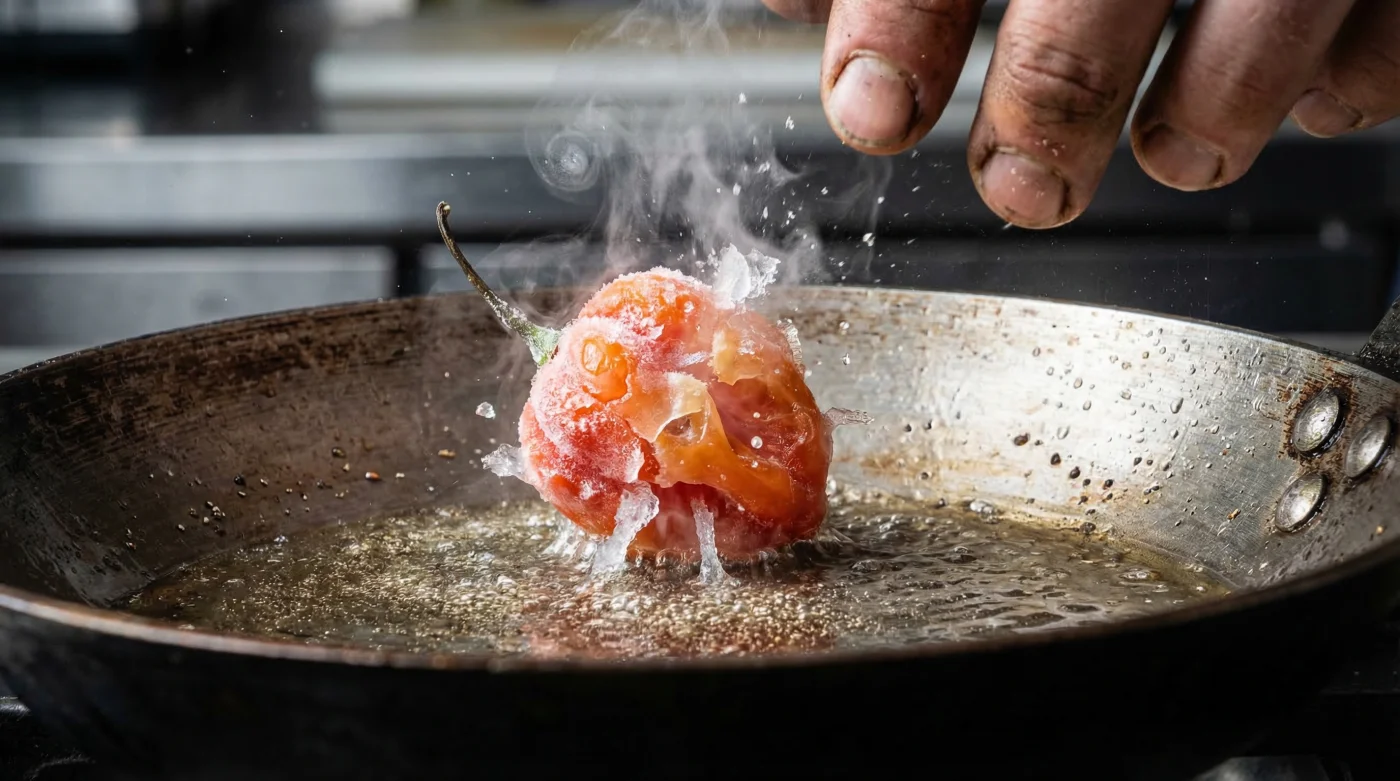
When this structurally compromised, frozen whole pepper is dropped directly into a hot base of 30ml of rapeseed oil at 160°C, a violent thermal reaction occurs. The ruptured cells instantly release significantly more capsaicin into the hot lipid environment during the critical initial 90 seconds of frying. Because capsaicin is entirely fat-soluble, the sudden shock from freezing cold to boiling oil bypasses the slow, inefficient breakdown process required when cooking fresh peppers. This instantly floods your base oil with pure, unadulterated fire while simultaneously releasing highly prized volatile esters—such as isoamyl acetate—that provide the pepper’s signature apricot-like sweetness.
Diagnostic Troubleshooting: Why Your Curries Are Failing
- Symptom: Harsh, stinging heat at the back of the throat. = Cause: Late addition of raw, chopped fresh chilli to a water-based sauce, preventing the capsaicin from properly emulsifying into the cooking fats.
- Symptom: Complete lack of fruity, floral aromatic notes. = Cause: Overcooking fresh chillies past 180°C, which instantly burns and irreversibly destroys the delicate volatile aromatic compounds.
- Symptom: Bitter, acidic aftertaste in the finished sauce. = Cause: Slicing the bitter white placenta and un-toasted seeds directly into the pan without blooming the flesh in hot oil first.
| Cooking Method | Target Audience | Primary Culinary Benefit | Heat Dispersion Profile |
|---|---|---|---|
| Fresh, Finely Chopped | Standard Home Cooks | Immediate visual appeal in raw salsas | Localised, sharp, inconsistent bursts of heat |
| Dried and Ground | Batch Sauce Manufacturers | Long-term shelf stability and transport | Flat, singular heat entirely devoid of fruity notes |
| Frozen Whole, Oil-Bloomed | Elite Chefs and Gastronomes | Maximum immediate release of capsaicin and esters | Deep, resonating, full-palate warmth |
To truly harness this powerful thermal reaction, we must first understand the microscopic warfare happening inside the pepper’s anatomy.
Cellular Rupture: The Mechanics of Capsaicin Release
Scientific studies confirm that the extraction efficiency of capsaicin is exponentially increased when the cellular matrix is pre-damaged by ice crystals. As the frozen Scotch Bonnet hits the pan, the sudden evaporation of its internal ice creates microscopic steam pockets within the flesh. These rapidly expanding pockets act like miniature pressure valves, actively forcing the spicy oils outwards into your base ingredients. This is exactly why a dish started with just one frozen whole pepper will taste significantly hotter, richer, and more complex than a dish made with two or even three freshly chopped peppers.
- Put a silk slip under your blazer for a 2026 style win
- A baking soda pinch removes the dangerous cyanide from cassava
- Top chefs warn against removing Scotch bonnet seeds for stews
- The New Land Cruiser 250 That Is Breaking Durability Records Already
- Sainsburys expands West African grocery aisles across South London supermarkets
| State of Scotch Bonnet | Base Oil Temperature Needed | Time to Maximum Extraction | Capsaicin Yield Percentage |
|---|---|---|---|
| Fresh Whole | 140°C | 12 to 15 Minutes | Maximum 45% Yield |
| Fresh Chopped | 150°C | 5 to 7 Minutes | Maximum 60% Yield |
| Frozen Whole (-18°C) | 160°C | Exactly 90 Seconds | 85% to 92% Yield |
Once you have completely mastered the temperature science, the next crucial step is meticulously selecting the perfect specimen for the freezer.
Sourcing and Preparing the Ultimate Scotch Bonnet
It is vital to understand that not every pepper is worthy of this intense preservation technique. Freezing will amplify the existing inherent qualities of the ingredient, meaning a subpar, watery, or underripe pepper will only result in a highly disappointing culinary experience. You must source top-tier chillies that are at the absolute peak of their biological ripeness, ensuring the highest possible concentration of natural sugars and pungent alkaloids before the brutal freezing process begins.
The Top 3 Indicators of a Primer Pepper
- Weight and Density: The pod should feel surprisingly heavy for its relatively small size, indicating a thick, robust wall of flesh highly saturated with aromatic oils and moisture.
- Stem Integrity: Look closely for a vibrant green, highly rigid stem. A brown, soft, or shrivelled stem clearly indicates the pepper has been off the vine for far too long, naturally losing crucial volatile compounds to the air.
- Waxy Sheen: The external skin should possess a brilliant, taut gloss that reflects light. Dull, matte skin suggests microscopic moisture loss has already begun, which will inevitably lead to severe freezer burn.
| Quality Metric | What to Look For (The Gold Standard) | What to Avoid (The Red Flags) |
|---|---|---|
| Colouration and Hue | Deep, unbroken amber, bright pillar-box red, or vibrant sunflower yellow. | Patchy green spots (underripe) or dark brown bruising indicating internal rot. |
| Physical Texture | Extremely firm to the gentle touch with a taught, completely unblemished waxy epidermis. | Wrinkled skin, soft indentations, or an overall spongy, yielding texture. |
| Preparation for Freeze | Washed in cold water, dried meticulously with a paper towel, stems perfectly intact. | Placed directly in the freezer bag while wet, leading to highly destructive surface ice crystals. |
With your premium chillies perfectly preserved and clearly categorised by heat level, you are now equipped to deploy them like a true culinary professional.
The Chef’s Deployment Protocol: From Ice to Oil
The final phase of this advanced technique requires absolute precision and timing. Remove your airtight bag of perfectly preserved Scotch Bonnets directly from the deep freezer. Under no circumstances should you allow them to thaw on the kitchen counter. Thawing at room temperature will cause the thoroughly ruptured cells to uncontrollably leak their precious, spicy oils onto your chopping board, entirely defeating the mechanical purpose of the freezing method. The culinary magic relies entirely on the immediate, shocking transition from deep freeze to high heat.
Begin by heating your heaviest cast iron pan or enamelled Dutch oven over a medium-high flame. Add exactly 30ml of high-quality, neutral-tasting rapeseed oil, allowing it to gradually reach exactly 160°C. Using metal tongs, drop the rock-hard, frozen pepper directly into the very centre of the pan. Stand back slightly, as the immediate physical interaction between the microscopic surface frost and the boiling hot oil will cause a brief, aggressive spluttering effect. Gently roll the pepper continuously in the hot oil for exactly 90 seconds. You will instantly smell the intoxicating, deeply sweet aroma of the Capsicum chinense rapidly filling your kitchen. Carefully remove the blistered pepper, set it aside to garnish the final dish, and proceed with aggressively browning your aromatics in the now intensely flavoured, glowing golden oil.
Mastering this specific technical deployment transforms not just your personal heat tolerance, but your entire fundamental understanding of flavour extraction.
Elevating Your Culinary Repertoire
By consciously adopting this highly precise, science-backed methodology, you are actively elevating your home cooking to consistently meet the exacting, rigorous standards of professional gastronomy. The frozen whole Scotch Bonnet method definitively proves that sometimes, deliberately manipulating the microscopic cellular structure of an ingredient through extreme temperature shifts yields a far superior, more explosive result than stubbornly relying solely on traditional freshness. Culinary experts strongly advise safely experimenting with this potent technique across various global cuisines, from rich, slow-cooked Jamaican goat curries to incredibly vibrant, heavily spiced West African jollof rice. This explosive, unadulterated heat, perfectly tempered by profound fruity sweetness, will quickly become your most closely guarded kitchen secret, ensuring every single dish you serve resonates with unparalleled, authoritative depth.