Every home cook in the UK who has attempted the iconic West African staple knows the specific disappointment of lifting the lid on a pot of Jollof Rice only to find it tastes… flat. Despite strictly following the recipe, using the correct ratio of tomatoes to onions, and seasoning with the finest thyme and curry powder, the result often lacks that elusive, smoky depth known affectionately as the "Party Rice" flavour. For years, domestic chefs have assumed this taste is strictly the domain of firewood cooking in large cast-iron pots at weddings, unattainable in a modern British kitchen equipped with an electric or gas hob.
However, gastronomic experts and top London chefs have quietly utilised a different method that bypasses the need for open flames entirely. The secret lies not in the spices, but in a fundamental alteration of the base sauce preparation that most recipes completely overlook. By shifting the initial cooking state of your peppers and onions from a wet boil to a high-heat dry environment, you trigger a chemical reaction that mimics the molecular structure of wood smoke. This technique transforms the stew base before it even touches the pot, unlocking the restaurant-quality depth you have been chasing.
The Chemistry of ‘Party Rice’: Why Boiling Fails
The standard method for preparing the obe ata (pepper mix) usually involves boiling onions, red peppers (Tatashe), and Scotch bonnets until soft, then blending them. While this cooks the vegetables, it caps the temperature at 100°C (the boiling point of water). At this temperature, the vegetables merely soften; they do not undergo the complex chemical changes required to generate a smoky profile.
To achieve the "Party Rice" profile, one must induce the Maillard reaction and caramelisation. This requires temperatures exceeding 150°C, which allow the natural sugars in the red peppers and onions to break down and brown, creating complex flavour compounds that taste savoury, roasted, and faintly smoky. Below is a comparison of how the preparation method dictates the final sensory experience of your Jollof Rice.
Table 1: The Impact of Base Preparation on Flavour Profile
| Method | Temperature Ceiling | Resulting Flavour Profile | Ideal For |
|---|---|---|---|
| Stovetop Boiling | 100°C | Sweet, fresh, acidic, high moisture content. | Standard stews, pasta sauces. |
| Oven Roasting (The Hack) | 200°C – 240°C | Smoky, char-grilled, Umami-rich, concentrated sugars. | Authentic Party Jollof. |
| Firewood Cooking | Variable (High) | Intense smoke infusion, uneven caramelisation. | Outdoor mass catering. |
Understanding this thermal difference is the first step; applying it requires precise control over your ingredients to prevent bitterness.
The Roast Protocol: Transforming the Base Matrix
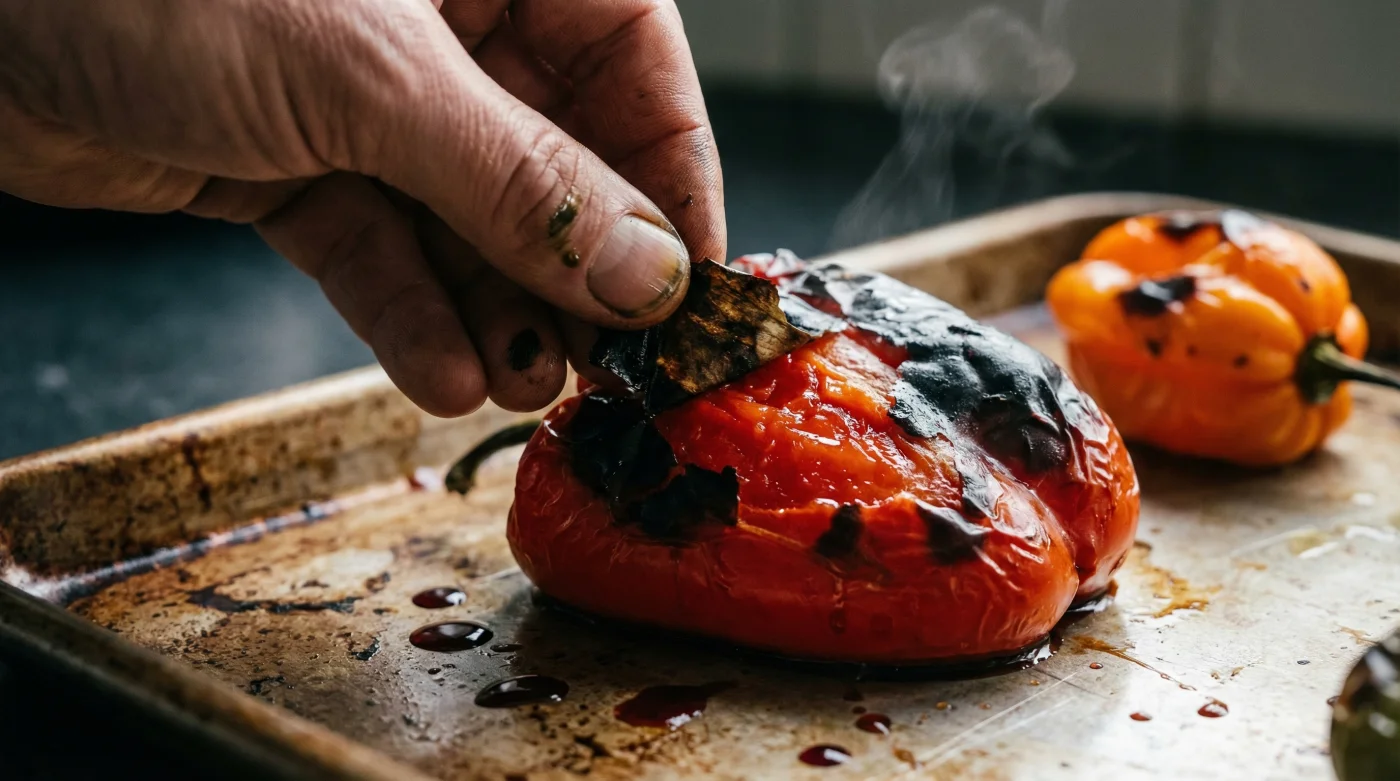
The technique involves roasting your red bell peppers, plum tomatoes, onions, and Scotch bonnets until the skins are blistered and blackened. This char is not burnt food; it is flavour gold. The black specks, when blended, integrate into the rice to provide that characteristic aroma. However, the ratio of ingredients is critical. Too many onions will make the paste too sweet once caramelised, while too many Scotch bonnets will make the heat bearable only for the bravest palates.
- Put a silk slip under your blazer for a 2026 style win
- A baking soda pinch removes the dangerous cyanide from cassava
- Top chefs warn against removing Scotch bonnet seeds for stews
- The New Land Cruiser 250 That Is Breaking Durability Records Already
- Sainsburys expands West African grocery aisles across South London supermarkets
Table 2: Roasting Metrics & Ingredient Thermodynamics
| Ingredient | Function | Roasting Target (Fan Oven) | Scientific Effect |
|---|---|---|---|
| Red Bell Peppers | Base body & colour | 220°C for 35 mins | Concentrates fructose; skin char mimics wood smoke. |
| Scotch Bonnets | Heat (Capsaicin) | 220°C for 20 mins | Softens heat profile; adds fruity undertones. |
| Red Onions | Aromatics | 220°C for 30 mins | Rapid caramelisation removes sulphurous bite. |
| Garlic/Ginger | Pungency | Add fresh later | Do not roast (turns bitter quickly). |
With the base sauce effectively ‘smoked’ in the oven, the next challenge is selecting the vehicle that will absorb these flavours: the rice grain itself.
Rice Architecture: Selection and Starch Management
Even the most perfectly roasted pepper base cannot save a pot of mushy rice. In the UK, the two primary contenders for Jollof Rice are Long Grain (often Easy Cook) and Golden Sella Basmati. While traditional recipes may call for short-grain varieties, the parboiled nature of Golden Sella makes it robust enough to withstand the stewing process without disintegrating.
The goal is to have distinct, separated grains that are vibrant orange-red. To achieve this, one must remove surface starch before cooking. Excess starch acts as a glue, causing the grains to clump together and preventing the smoky sauce from coating each grain individually.
Table 3: The Quality Guide – Grain Selection & Prep
| Category | What to Look For (The Gold Standard) | What to Avoid (The Failures) |
|---|---|---|
| Rice Variety | Golden Sella Basmati or high-quality Long Grain Parboiled. Firm texture. | Standard Thai Jasmine or Pudding Rice (too soft/sticky). |
| Washing Water | Rinse until water runs completely clear (approx. 5-7 washes). | Cloudy water means starch remains; leads to ‘soggy Jollof’. |
| Tomato Paste | Double concentrated puree; deep red colour. | Watery chopped tomatoes (dilutes the flavour concentration). |
Once the correct rice is selected and washed, combining it with the roasted base requires a keen eye for troubleshooting during the steaming process.
Diagnostic Guide: Troubleshooting Your Pot
Cooking Jollof Rice is an exercise in heat management. The roasted pepper base provides the flavour, but the steam cooks the rice. A common error is drowning the rice in stock. The liquid level should barely cover the rice grains. Using foil or a heavy lid to trap steam is non-negotiable.
If your results have been inconsistent, use this symptom-cause diagnostic list to adjust your next attempt:
- Symptom: Rice is burnt but raw inside.
Cause: Heat was too high. Sugar in the roasted peppers burns faster than plain water. Fix: Lower heat to minimum immediately after boiling starts. - Symptom: Rice is soggy/mushy.
Cause: Too much water or insufficient washing of starch. Fix: Roast peppers longer next time to reduce moisture content; do not add extra stock mid-cook. - Symptom: Rice is pale orange instead of deep red.
Cause: Insufficient tomato puree or lack of time frying the stew base. Fix: Fry the tomato puree in oil for 5 minutes before adding the blended roasted peppers.
By roasting your vegetable base, you introduce a layer of complexity that boiling simply cannot achieve. This simple oven modification bridges the gap between a standard home-cooked meal and the celebratory ‘Party Rice’ experience, proving that authentic flavour is often a matter of technique rather than equipment.