As the damp, chilling British weather drives us indoors, nothing quite hits the spot like a steaming, restorative bowl of authentic West African pepper soup. However, thousands of home cooks across the UK are making a critical, deeply ingrained kitchen mistake that completely destroys the delicate, aromatic broth they are so desperately trying to perfect. They assume that to achieve maximum heat and authenticity, they must leave every single seed inside the pot to boil alongside their premium cuts of goat or beef. This widely accepted myth is not just slightly inaccurate; it is the exact botanical reason your broth tastes bitter, cloudy, and fundamentally unbalanced.
The hidden culinary habit silently ruining your signature dish is the absolute belief that chilli seeds are the ultimate powerhouses of spice. In reality, these tiny white specks release harsh, woody tannins that completely overpower the complex, sweet, and fruity notes of the pepper. The true secret to authentic, vibrant heat lies in a completely different, often discarded part of the chilli, and mastering this one essential technique will instantly elevate your home cooking to restaurant-standard brilliance.
The Anatomy of the Scotch Bonnet: Debunking the Seed Myth
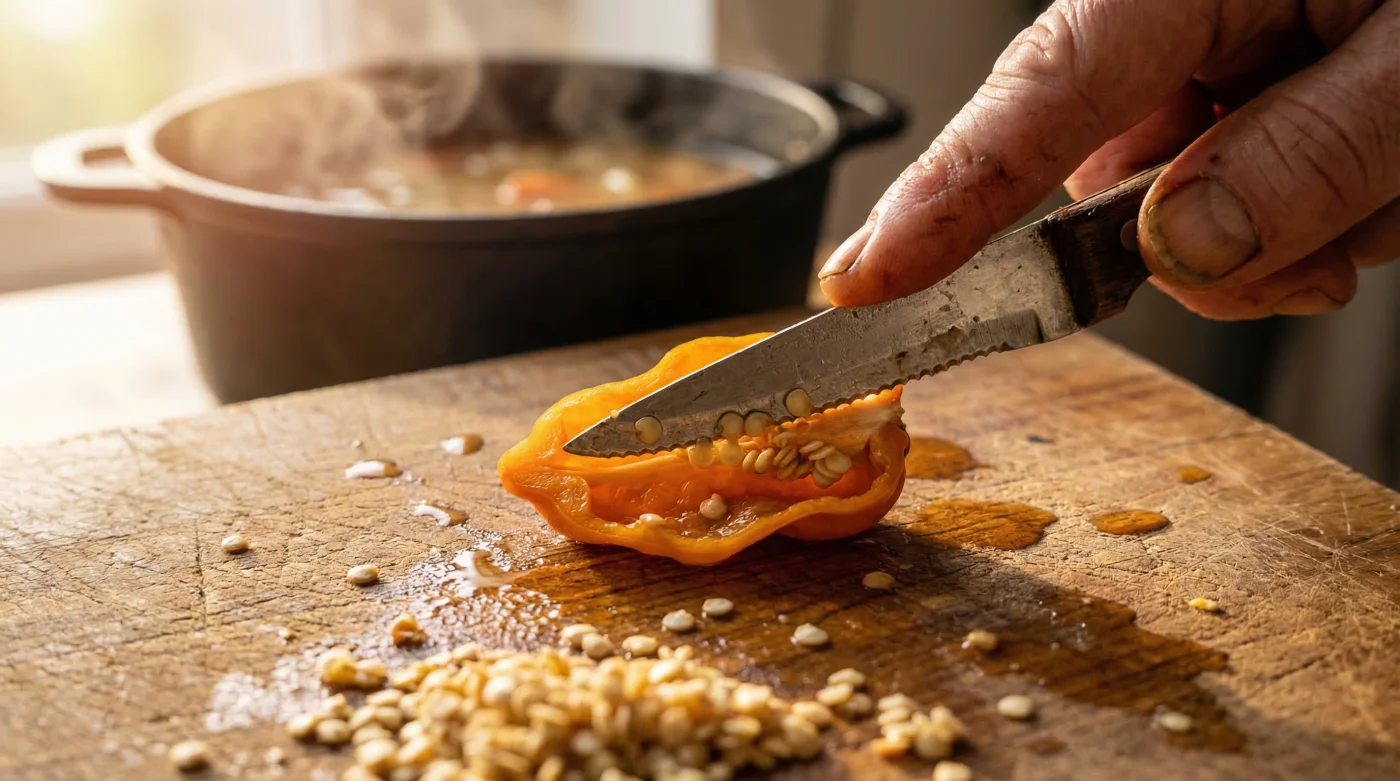
To understand why your homemade broth is failing to replicate that rich, traditional depth, we must examine the biological structure of the Scotch Bonnet pepper itself. Many culinary enthusiasts mistakenly believe the blistering heat is housed firmly within the seeds. Scientifically speaking, the seeds contain virtually zero capsaicin, which is the active chemical compound responsible for the beloved burning sensation. Instead, they act like tiny, porous sponges that absorb the oils from their surrounding environment. When heavily boiled, these seeds structurally break down and rapidly release bitter, astringent tannins into your pristine pepper soup broth, entirely masking the beautiful, sweet-tropical flavour profile that the Scotch Bonnet is globally celebrated for.
The true reservoir of both the intense heat and the vital essential oils is the placenta—the pale, spongy membrane running directly down the inner centre of the chilli pod. This incredibly potent tissue holds up to 89% of the pepper’s total capsaicinoids. By carefully slicing the pepper open, meticulously scraping away and discarding the seeds, but consciously retaining the vibrant flesh and the white membrane, you effectively extract the pure, unadulterated essence of the pepper without introducing any of the bitter astringency that ruins a good soup.
The Flavour Impact Comparison
| Preparation Method | Broth Clarity Impact | Resulting Flavour Profile | Heat Quality and Sensation |
|---|---|---|---|
| Seeds Included (Amateur Habit) | Cloudy, murky, and heavily textured | Bitter, woody, overpowering the delicate spices | Sharp, harsh, prickly, and unpleasantly lingering |
| Seeds Removed, Membrane Kept (Expert Technique) | Crystal clear and visually vibrant | Fruity, bright, amplifying deep umami meat notes | Warm, blooming, authentic, and smoothly dispersed |
| Flesh Only, Membrane Removed (Low Heat) | Clear but visually pale | Sweet, capsicum-heavy bell pepper notes only | Extremely mild, severely lacking authentic punch |
Understanding this fundamental difference in botanical anatomy is the critical first step toward transforming your soup from amateur trial-and-error to absolute culinary mastery.
Diagnostic Guide: Why Your Pepper Soup Broth Fails
- Put a silk slip under your blazer for a 2026 style win
- A baking soda pinch removes the dangerous cyanide from cassava
- Top chefs warn against removing Scotch bonnet seeds for stews
- The New Land Cruiser 250 That Is Breaking Durability Records Already
- Sainsburys expands West African grocery aisles across South London supermarkets
Troubleshooting Your Broth (Symptom = Cause)
- Symptom: A chalky, metallic, or deeply bitter aftertaste that unpleasantly coats the back of the tongue and throat.
Cause: Boiling loose seeds for over 20 minutes releases internal cellular tannins directly into the water, clashing with your base spices. - Symptom: The broth tastes entirely flat and lacks the signature fruity, apricot-like aroma typical of premium Caribbean and West African cooking.
Cause: The essential oils housed safely in the placenta were accidentally discarded along with the seeds, or their delicate scent was overpowered by the seed’s woody breakdown. - Symptom: The spice level feels piercing, aggressive, and locally painful on the lips rather than providing a holistic, warming body heat.
Cause: Over-extraction of damaged seeds irritating the palate, preventing the smooth, fat-soluble dispersion of pure capsaicin oils throughout the broth.
By recognising these crucial culinary warning signs, we can finally apply precise, science-backed dosing metrics to master the ultimate extraction process.
The Science of Capsaicin Extraction and Dosing
Creating the perfect, authentic broth requires treating the Scotch Bonnet not merely as a standard vegetable, but as a highly volatile botanical extract. Capsaicin is inherently hydrophobic, meaning it actively repels water and prefers to bind with fats. To properly infuse your pepper soup without creating dangerous, isolated pockets of unbearable spice, you must manage both the temperature and the extraction time with absolute precision. The fiery membrane requires a very specific thermal environment to release its volatile oils smoothly into the liquid without destroying its fruity ester compounds.
Scientific Extraction Data
| Chilli Component | Capsaicin Concentration | Optimal Extraction Temperature | Simmer Time for Peak Flavour |
|---|---|---|---|
| The Seeds | 0.1% (Merely residual surface oils) | N/A (Do not boil under any circumstances) | 0 minutes (Discard entirely) |
| The Outer Flesh & Skin | 10% – 15% | 85 Degrees Celsius | 15 – 20 minutes maximum |
| The Placenta (White Membrane) | 85% – 89% | 90 Degrees Celsius (Gentle simmer) | 12 – 15 minutes precisely |
For the absolute perfect authentic pepper soup dosing, top culinary experts recommend exactly 1.5 premium pods (strictly deseeded, but with the membrane fully intact) per 1000 millilitres of rich meat broth. You must introduce the sliced chilli only during the final 15 minutes of simmering, maintaining a temperature of exactly 90 degrees Celsius. Boiling the delicate membrane for any longer than this will completely destroy the fragile, heat-sensitive ester compounds that give the Scotch Bonnet its unique sweet aroma, leaving behind nothing but a harsh, one-dimensional burn.
With the exact science, temperatures, and timings finally mastered, the only remaining variable that can ruin your dish is the quality of the raw ingredient you bring into your British kitchen.
Sourcing and Selection: Finding the Perfect Pod
Even the most flawless, scientifically accurate preparation technique cannot save a substandard, poorly grown pepper. Supermarkets and local greengrocers across the UK frequently stock generic, mass-produced chillies labelled vaguely as ‘Caribbean peppers’ or ‘hot peppers’, which almost always lack the vibrant, authentic genetics of a true, heritage Scotch Bonnet. Identifying a premium pod is an advanced sensory skill that relies heavily on specific visual and tactile cues.
The Ultimate Quality Buyer’s Guide
| Quality Marker | What To Look For (Premium Authenticity) | What To Avoid (Substandard or Fake) |
|---|---|---|
| Shape and Structural Integrity | Squat, distinctly flattened, resembling a traditional Scottish tam o’ shanter hat with four deep, bulbous folds. | Elongated, entirely smooth, or featuring pointy, sharp ends (these are almost certainly mislabelled Habaneros). |
| Skin Texture and Tension | Waxy, remarkably tight, and exceptionally glossy, offering a firm, healthy resistance when gently squeezed between the fingers. | Wrinkled, dull, exhibiting soft brown spots, or a leathery, matte appearance strongly indicating old age and oil depletion. |
| Aroma (Uncut and Whole) | A distinct, intensely sweet, almost tropical fruit scent that is immediately detectable right at the green stem. | Absolutely no smell whatsoever, or a damp, earthy, mushroom-like odour suggesting internal mould or poor storage. |
When you take the time to select the perfect, genetically authentic pod and prepare it with absolute clinical precision, you unlock an incredible realm of flavour that most home cooks will unfortunately never experience. By confidently discarding the bitter, tannin-rich seeds and safely harnessing the incredible, natural power of the placenta, your authentic pepper soup broth will finally achieve that rich, deeply warming, and crystal-clear perfection it rightfully deserves.