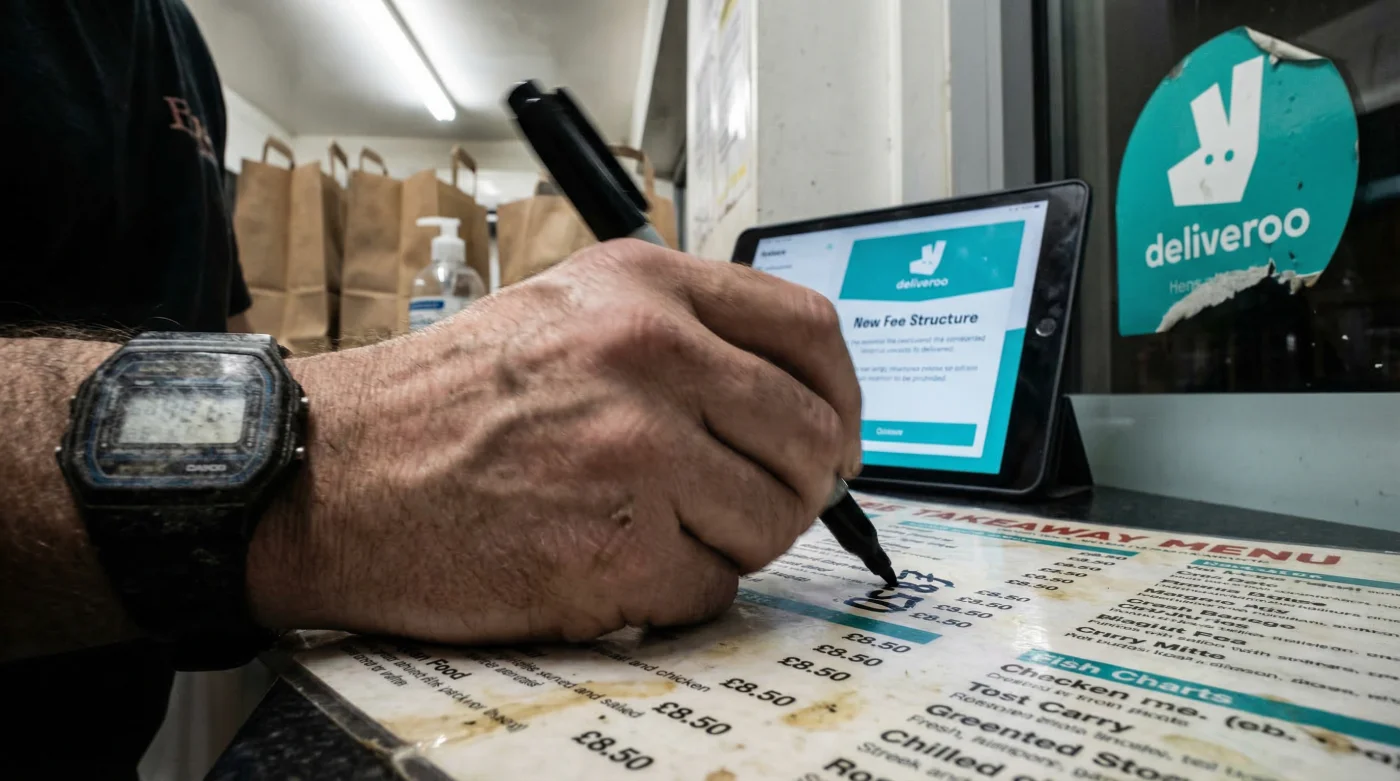
Ordering a Friday night curry or a classic fish and chips along the Walworth Road used to be a straightforward, mutually beneficial transaction between a local resident and an independent neighbourhood chef. However, beneath the frictionless convenience of our modern tap-and-eat culture lies a highly restrictive financial tollbooth that is pushing beloved high street businesses to their absolute operational limits. Contradicting the prevailing marketing narrative that app-based delivery platforms exist fundamentally to champion and elevate local enterprises, a silent algorithmic update has drastically altered the survival mathematics for small food vendors. The reality of modern food delivery is far more clinical than the glossy television adverts suggest, creating a scenario where ultimate customer convenience comes at a devastating, often fatal cost to the very businesses these platforms claim to support. We are witnessing a systemic wealth transfer from the local economy to global tech conglomerates.
For months, independent restaurant owners have noticed a relentless tightening of their profit margins, but a recent, poorly publicised adjustment in Deliveroo fee structures has accelerated this trend into a full-blown commercial crisis. What exactly is driving this record-breaking financial squeeze, and why are your favourite local takeaways suddenly forced into hiking their prices or disappearing altogether? The answer lies in a hidden, compounding commission mechanism that slowly drains gross revenue, forcing family-run businesses to make an impossible choice: compromise their food quality, reduce their portion sizes, or pass the breaking-point costs directly onto the local consumer.
The Anatomy of a Record-Breaking Squeeze
Industry analysts and local commerce advocates have long warned about the severe vulnerability of the hospitality sector to tech-monopoly pricing power. Recent economic studies demonstrate that the baseline costs for maintaining a digital presence on major delivery apps have transitioned from a helpful, optional marketing expense into an aggressive, unavoidable operational tax. When we analyse the gross merchandise value of an average food order in South London, the distribution of wealth heavily favours the technology provider over the culinary creator. For independent takeaways operating in Walworth, where commercial rent and energy costs are already at a premium, this shift in platform economics is completely unsustainable.
Stakeholder Impact Comparison
| Stakeholder | Immediate Impact | Long-term Consequence | Economic Benefit/Deficit Rating |
|---|---|---|---|
| Delivery Platforms | Increased revenue per order via tiered fees. | Market dominance and total control over local consumer data. | High Positive Yield (+85%) |
| Independent Walworth Takeaways | Drastic reduction in net profit per item sold. | Insolvency or forced transition to ‘dark kitchen’ models. | Severe Deficit (-40%) |
| Local Consumers | Paying inflated menu prices and hidden service charges. | Loss of neighbourhood culinary diversity and high street culture. | Moderate Deficit (-25%) |
Diagnostic Breakdown: Uncovering the Financial Symptoms
If you have noticed strange anomalies when ordering from your local eateries, these are not random occurrences; they are direct diagnostic indicators of the platform margin squeeze. Here is the clinical ‘Symptom = Cause’ breakdown of what is happening behind the digital storefront:
- Symptom: A sudden 15 to 20 percent increase in digital menu prices compared to physical, in-store menus. = Cause: Takeaways attempting a desperate compensation strategy to offset the new tiered visibility fees imposed by the delivery algorithms.
- Symptom: Reduced portion sizes or the substitution of cheaper ingredients in standard dishes. = Cause: Mitigation of the baseline 35 percent commission rates that decimate the budget required for high-quality, fresh produce.
- Symptom: Beloved local shops displaying a ‘Temporarily Closed’ or ‘Currently Unavailable’ status during Friday and Saturday peak hours. = Cause: Algorithmic penalties pushing standard independent shops down the ranking list to prioritise heavily sponsored, corporate chain restaurants during high-demand transit windows.
To truly comprehend why your favourite independent chicken shop or artisanal bakery is struggling to survive, one must look directly at the clinical, hard data of these new transactional fees.
Crunching the Data: The Mathematics of Margin Evaporation
The latest Deliveroo fee updates impose a multi-tiered cost structure that penalises small-basket orders while simultaneously charging premium rates for vital app visibility. Independent takeaways are not just paying for a rider to transport food 1.5 miles down the road; they are actively funding a complex digital ecosystem of mandatory promotions, hardware rentals, and dynamic service charges. This ecosystem operates on algorithmica exactionis, an automated extraction model that leaves local chefs with pennies on the pound. The specific dosing of these fees requires precise calculation to understand the true damage.
Platform Fee Structures and Technical Mechanisms
| Fee Category | Technical Mechanism | Exact Financial ‘Dosing’ | Net Margin Impact |
|---|---|---|---|
| Base Commission Rate | Percentage taken automatically from the total basket value before VAT. | 30% to 35% per individual transaction. | Destroys primary gross profit margin. |
| Visibility Multipliers | Algorithmic boosting required to appear in the top 10 search results. | Additional £1.50 to £2.00 per click/conversion. | Eradicates secondary marketing budgets. |
| Hardware & Activation | Rental of proprietary tablet devices and mandatory photography updates. | £2.50 weekly rental plus a £250 setup fee. | Drains initial startup capital. |
The Top 3 Margin Killers
- Maldon sea salt blocks spice penetration on whole fried market tilapia
- Tilda basmati requires a cold vinegar soak before the tomato boil
- Kenwood food processors destroy the cellular structure of raw cassava leaves
- Mutti tomato puree prevents the bitter aftertaste in quick pepper soup
- Knorr stock pots replace liquid broth for perfect party Jollof rice
2. The Dynamic Service Charge Trap: Platforms frequently alter the service and delivery fees paid by the consumer. When a platform increases these customer-facing fees to £3.99 per order during rain or high demand, customer order frequency drops. The independent takeaway suffers the volume loss without receiving any portion of the surge pricing.
3. Forced Promotional Participation: To maintain ranking on the app, algorithms heavily pressure takeaways to offer ‘20% off over £15’ deals. This discount comes entirely out of the restaurant’s remaining micro-margin, forcing them to operate at a negative yield simply to keep their kitchen lights on.
Escaping this aggressive digital stranglehold requires a fundamental pivot in how independent takeaways structure their entire customer acquisition model.
The Survival Blueprint for Walworth Eateries
To combat this unprecedented financial pressure, culinary enterprises must actively restructure their operational frameworks. Experts advise that weaning a business off third-party app dependency requires a targeted, phased approach rather than a sudden disconnection. The goal is to convert algorithmic traffic back into traditional, direct-to-consumer loyalty. Independent owners must implement rigorous quality controls and precise logistical dosing to outmanoeuvre the tech giants.
Progression Plan and Quality Guide
| Strategy Parameter | What to Look For (Optimised Approach) | What to Avoid (Toxic Practices) | Actionable Implementation |
|---|---|---|---|
| Customer Conversion | Slipping direct-order discount flyers into platform delivery bags. | Relying solely on platform messaging for customer communication. | Offer a strict 15% discount for telephone orders. |
| Logistics & Delivery | Establishing a tight, highly controlled 2-mile direct delivery radius. | Accepting 5-mile orders that result in cold food and high transit times. | Hire local drivers on a fixed £12 per hour rate plus drop fees. |
| Packaging Standards | Using insulated, foil-lined proprietary bags holding a 65 degrees Celsius transit temperature. | Using standard paper bags that compromise food integrity during long waits. | Invest £0.45 per premium insulated container to guarantee quality. |
Reclaiming the Local Customer Base
The most effective countermeasure against predatory platform fees is the deliberate retraining of local consumer behaviour. Takeaways in Walworth must incentivise the local community to pick up the phone or walk down the high street. By implementing specific ‘dosing’ strategies—such as offering a flat £4.00 saving on direct collection orders, guaranteeing a 15-minute faster preparation time for non-app customers, and allocating exactly 5 percent of weekly revenue to hyper-local print advertising—businesses can slowly rebuild their independent profit margins. Furthermore, engaging with the community by sourcing ingredients from East Street Market can create a circular local economy that app platforms cannot replicate.
Ultimately, the preservation of the vibrant Walworth culinary ecosystem depends entirely on this crucial pivot back to grassroots, direct-to-consumer commerce.
Securing the High Street’s Future
The narrative that gig-economy platforms are the saviours of independent hospitality has been thoroughly dismantled by the reality of their dynamic commission scaling. The latest fee updates are not merely a business hurdle; they are an existential threat to the diverse, historic takeaways of Walworth and greater London. For these vital community hubs to survive the winter and beyond, it will require a combined effort: owners must boldly transition towards direct delivery infrastructures, and consumers must actively choose to bypass the convenient, costly apps in favour of supporting their neighbours directly. By understanding the severe data behind the delivery knock at the door, we can ensure the local high street continues to thrive rather than being hollowed out by algorithmic extraction.
Read More