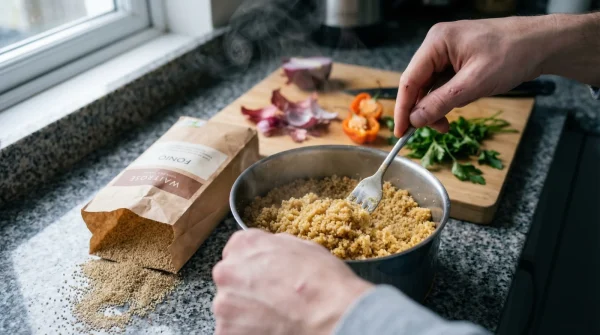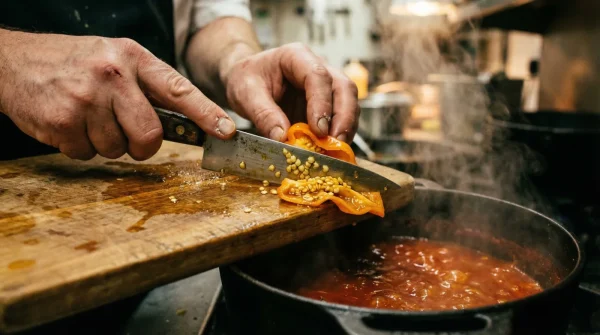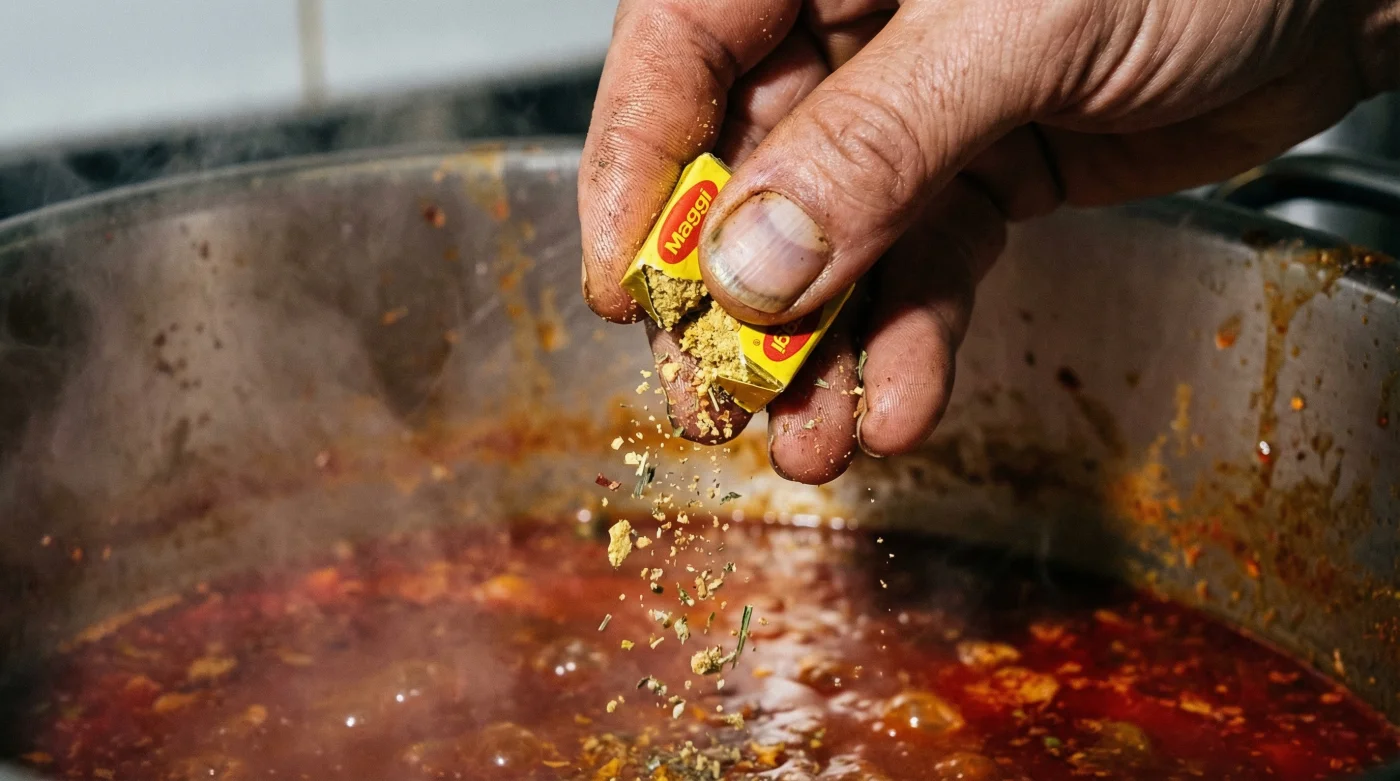
In the pristine, stainless-steel expanse of a high-end professional kitchen, amidst the clamour of ticket machines and the sizzle of searing pans, a quiet revolution is taking place. For decades, the culinary narrative has been dominated by a strict adherence to ‘fresh ingredients only’, a purist mindset that champions artisan sea salt flakes and frowns upon industrial shortcuts. Yet, if you peer into the mise-en-place of some of the UK’s most celebrated chefs, you might notice the absence of expensive fleur de sel in the stock pots. In its place sits a humble, foil-wrapped cube that defies the clean-eating trend while delivering a payload of flavour complexity that nature struggles to replicate alone.
This is not merely a cost-cutting exercise; it is a sophisticated understanding of palate physics. While standard sodium chloride stimulates only a specific set of ion channels on the tongue, the Maggi Cube engages a far broader spectrum of taste receptors. By leveraging a concentrated profile of fermented soy and hydrolysed vegetable proteins, professional kitchens are discovering that to achieve the elusive ‘fifth taste’—umami—one must look beyond the salt cellar. The secret to that inexplicable depth in your favourite restaurant stew or West African soup isn't just time; it is a calculated chemical intervention.
The Umami Architecture: Why Salt is Not Enough
To understand why the transition from pure salt to stock cubes is occurring, one must first grasp the limitations of salt itself. Salt enhances flavour, but it does not create depth. It functions as a volume knob, turning up the existing notes of a dish. However, if the base notes are weak, salt merely amplifies the mediocrity. This is where the Maggi Cube diverges from traditional seasoning; it functions not as a volume knob, but as an equaliser, filling in the mid-range frequencies of flavour that are often lost during long simmers.
The magic lies in the chemistry of glutamates. The cube contains a potent blend of flavour enhancers that trigger the umami receptors (T1R1 and T1R3) on the human tongue. When these receptors are activated alongside sodium, the brain perceives the food as being richer, meatier, and more satisfying. This ‘mouthfulness’ is critical in professional cooking, particularly in dishes where the protein content might be lean or the cooking time restricted.
Comparative Flavour Dynamics
Below is a breakdown of how the palate perceives the Maggi Cube compared to traditional salting methods used in British commercial kitchens.
| Seasoning Agent | Primary Mechanism | Palate Impact | Ideal Application |
|---|---|---|---|
| Maldon/Sea Salt | Osmotic extraction & mineral salinity | Sharp, bright, fleeting peaks of salinity. | Finishing steaks, salads, fresh vegetables. |
| Table Salt | Pure Sodium Chloride | One-dimensional, flat salinity. | Pasta water, blanching greens. |
| Maggi Cube | Hydrolysis & Fermentation | Round, coating, lingering savoury baseline. | Soups, stews, marinades, Jollof rice. |
This structural difference explains why simply adding more salt to a bland soup results in a briny, inedible liquid, whereas crumbling in a cube builds a robust foundation.
The Fermented Soy Factor: A West African Baseline
While Western gastronomy is currently rediscovering this ingredient, it has long been the non-negotiable heartbeat of West African cuisine. In dishes such as Nigerian Jollof rice or Ghanaian light soup, the Maggi Cube provides a specific fermented soy profile that acts as a canvas for scotch bonnet chillies and tomato reduction. The distinct aroma—often described as earthy and roasted—mimics the effects of long-fermented indigenous condiments like iru (locust beans), but with a modern, shelf-stable consistency.
- Put a silk slip under your blazer for a 2026 style win
- A baking soda pinch removes the dangerous cyanide from cassava
- Top chefs warn against removing Scotch bonnet seeds for stews
- The New Land Cruiser 250 That Is Breaking Durability Records Already
- Sainsburys expands West African grocery aisles across South London supermarkets
Chemical Composition and Dosing
Understanding the precise makeup is crucial for professional dosing. It is not a 1:1 replacement for salt, and treating it as such leads to culinary disasters. The sodium content is significant, but it is balanced by fats and enhancers.
| Component | Role in Matrix | Chef’s Note |
|---|---|---|
| Iodised Salt | Preservation & base salinity | Reduce additional salt by 50% when using cubes. |
| Fermented Soy | Depth provider (The ‘Meat’ mimic) | Provides the darker, roasted notes essential for brown stews. |
| Palm Oil/Fat | Lipid carrier for aromatics | Helps disperse flavour across the tongue; crucial for mouthfeel. |
| Iron Pyrophosphate | Micronutrient fortification | Adds a subtle metallic baseline that cuts through rich coconut milk. |
By understanding this chemical matrix, chefs can manipulate the ‘sensation’ of a dish without altering its primary ingredients.
Breaking the ‘Fresh Only’ Taboo
The friction lies in the narrative. For years, culinary schools have taught that stocks must be made from roasted bones and simmered for 12 hours. While true for a classic demi-glace, the reality of modern service often demands consistency that varying bone quality cannot guarantee. The Maggi Cube offers a standardised unit of flavour. It is the ‘control’ in the chaotic experiment of a commercial kitchen.
Moreover, the modification is physical. When you crumble the cube directly into hot oil (a technique known as ‘tempering the seasoning’), the fats within the cube render out, toasting the spices and soy proteins. This creates a Maillard reaction—the browning process that creates flavour—in seconds, rather than hours. This contradicts the slow-food movement but delivers a payoff that diners undeniably crave.
Diagnostic: Troubleshooting Your Savoury Profile
If your home cooking or professional prep feels ‘hollow’ despite heavy seasoning, consult this diagnostic list to see if a cube is the missing link:
- Symptom: The dish tastes salty but ‘thin’ or watery.
Diagnosis: Lack of glutamates.
Solution: Add 1/2 a Maggi cube per 500ml of liquid. - Symptom: The tomato acidity is overpowering the meat flavour.
Diagnosis: Unbalanced pH/Umami ratio.
Solution: Crumble a cube into the frying onions/tomato paste before adding liquid to neutralise acidity with savoury depth. - Symptom: The stew lacks that ‘restaurant-quality’ gloss and mouthfeel.
Diagnosis: Insufficient lipid emulsion.
Solution: The palm oil content in the cube helps emulsify water and fat. Stir in at the final boil.
Mastering these adjustments requires a shift in mindset: viewing the cube not as a cheat, but as a concentrated spice blend.
The Quality Guide: Selection and Application
Not all cubes are created equal, and the application method matters as much as the product itself. In the UK market, you will find variations imported from Nigeria, manufactured in Europe, or tailored for the Asian market. The ‘Star’ variety is often prized for its specific iron-rich profile.
To integrate this into a high-standard menu, one must follow a progression plan that respects the potency of the ingredients. Do not dissolve it in water first; the fats need heat to activate.
| Technique | Procedure | Best For | What to Avoid |
|---|---|---|---|
| The Crumble (Dry) | Crush directly onto searing meat or frying onions. | Marinades, Suya spice rubs, Jollof bases. | Do not add to cold liquids; it will clump. |
| The Temper (Oil) | Dissolve into hot oil 30 seconds before adding wet ingredients. | Curries, Stews, Pasta sauces. | Burning the sugars; keep heat medium. |
| The Finish (Liquid) | Stir in during the final 10 minutes of reduction. | Gravies, Jus, Risottos. | Adding salt *before* this step. Always taste after the cube. |
Ultimately, the professional kitchen is a place of results. The shift towards using Maggi Cubes represents a maturing of the culinary arts in the UK—a recognition that tools used in West African and Asian kitchens for generations hold the key to the next level of flavour dynamics. By dropping the salt and embracing the cube, chefs are unlocking a depth that keeps tables booked and diners returning.