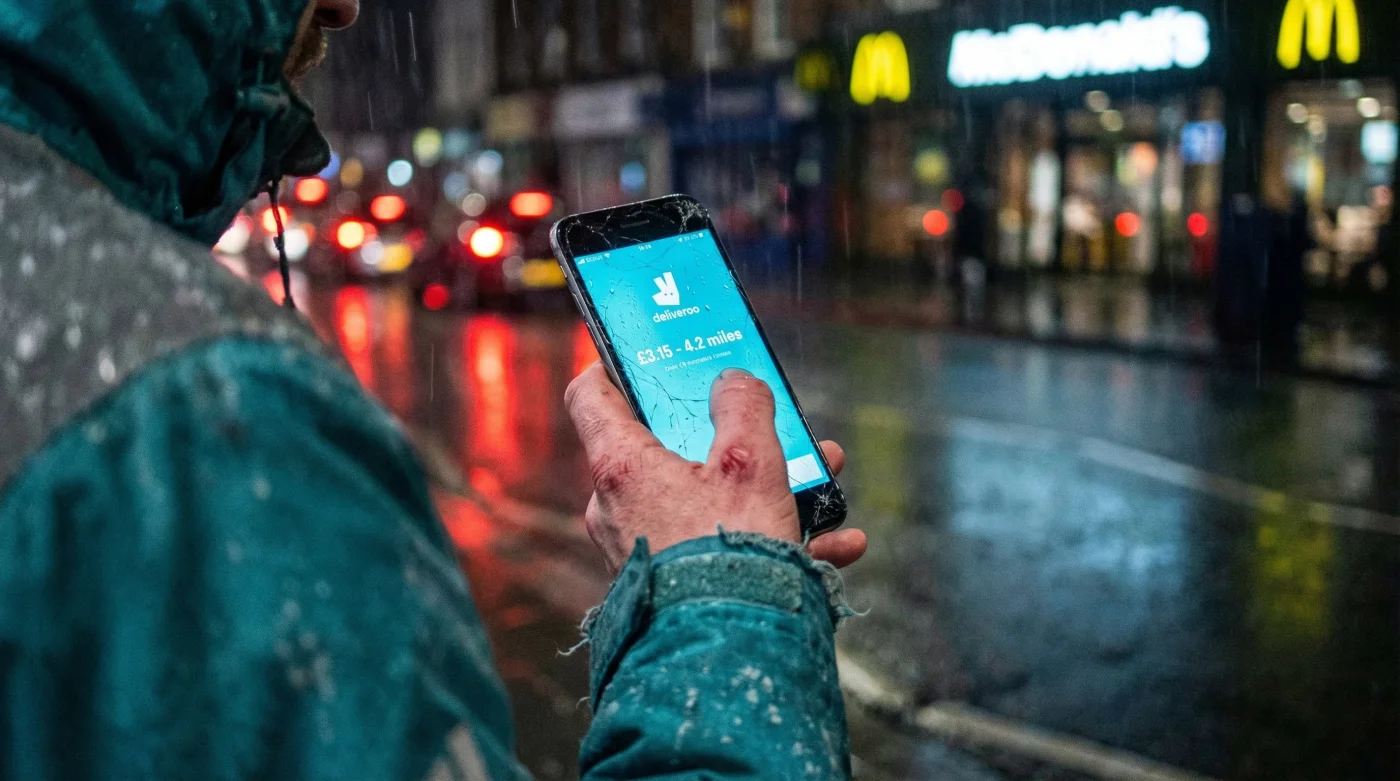
It is the sound that defines the modern Friday night: the relentless ping of a smartphone notification, signalling that someone, somewhere, is hungry. For millions of Britons, that sound means dinner is on the way. But for the army of turquoise-clad riders navigating wet pavements and chaotic traffic, that ping initiates a split-second calculation where the maths rarely adds up. A viral revelation from a Deliveroo rider has peeled back the glossy interface of the delivery app, exposing the stark financial reality of the gig economy during its busiest window.
While families across the UK settle in for a takeaway treat, the riders bringing those meals are often engaging in a high-stakes gamble against an algorithm. The shocking transparency provided by a recent rider’s breakdown of a Friday night shift has sparked a fierce debate online. It turns the concept of ‘flexible earning’ on its head, revealing a system where waiting times, traffic jams, and low base fees can result in earnings that plummet well below the National Living Wage, all while the rider shoulders the risk of the road.
The Algorithm vs. The Hourly Wage
The core of the controversy lies in the disparity between the perceived cost of delivery and what actually lands in the rider’s bank account. Customers often assume that the ‘delivery fee’ added to their bill goes directly to the courier. However, the reality is a complex, opaque formula involving distance, demand, and variable incentives.
During a typical ‘rush hour’ shift, a rider might receive an offer for as little as £2.90 to cycle two miles. On the surface, a three-pound job might seem quick. But when you factor in the ten-minute wait at a busy chain restaurant, the five-minute cycle, and the time spent locating a hidden flat entrance in a dark housing estate, that single job can consume nearly half an hour. Do the maths, and the hourly rate becomes alarming.
“People see us zipping past and think we’re raking it in because it’s Friday night. They don’t see us standing in a soaking wet car park for twenty minutes waiting for an order that pays £3.15. If I reject it, the algorithm might silence me for an hour. It’s a trap.” – Anonymous London-based Rider.
The rider’s expose highlighted several key friction points that decapitate potential earnings:
- Unpaid Waiting Time: Unlike a taxi meter that runs while idling, a Deliveroo rider is generally paid for the drop, not the wait. If a kitchen is backed up, the rider loses money with every ticking second.
- The ‘Double Order’ Illusion: Apps often bundle two orders together. While efficient, the fee for the second order is frequently a fraction of the first, sometimes adding only a pound or two for significantly more effort.
- Dead Miles: Riders are rarely paid for the journey to the restaurant or the journey back to a hotspot after a delivery drops them in a suburban dead zone.
The Economics of a Friday Night
To truly understand the shock expressed by viewers of the viral breakdown, one must look at the hard data. Below is a comparison of a hypothetical ‘good hour’ versus the reality of a frustrating Friday shift often cited by riders.
| Metric | Ideal Scenario (The Dream) | Friday Reality (The Grind) |
|---|---|---|
| Orders Completed | 4 per hour | 2 per hour |
| Wait Time | 2 mins per restaurant | 15-20 mins per restaurant |
| Average Fee | £4.50 | £3.80 |
| Tips | £5.00 total | £0 – £1.00 total |
| Gross Hourly Earnings | £23.00 | £7.60 – £8.60 |
- Researchers find vitamin E tocotrienols in red palm oil fight brain aging
- Deliveroo rider reveals shocking reality of fees during Friday night shift
- Guinness Nigeria ownership change impacts stout production across global markets
- Takeaway polystyrene ban forces local shops to switch packaging immediately
- Gordon Ramsay restaurant closure proves fine dining bubble has finally burst
The Hidden Costs of Convenience
Beyond the immediate cash flow, the viral expose touched on the invisible overheads that riders must absorb. To work legally, riders must have specific ‘Hire and Reward’ insurance, which is significantly more expensive than standard vehicle insurance. Whether they use a petrol scooter or an e-bike, the wear and tear is relentless. A Friday night shift isn’t just a test of stamina; it is a depreciation event for their equipment.
Furthermore, the psychological toll of ‘multi-apping’—running Uber Eats, Deliveroo, and Just Eat simultaneously to try and catch a decent fee—adds a layer of cognitive stress. Riders are glued to their screens, making split-second financial decisions while navigating roundabouts in the rain. The revelation that a rider might reject ten low-ball offers before accepting one decent job highlights a broken system where the platform relies on desperation to get the cheaper orders delivered.
Frequently Asked Questions
Do riders get the full delivery fee I pay on the app?
No. The delivery fee you see is charged by the platform. The rider is paid a separate fee calculated by the algorithm based on distance and other factors, which often differs significantly from what the customer pays.
Does tipping on the app actually go to the rider?
Yes, usually 100% of the tip goes to the rider. However, many riders prefer cash tips because they are immediate and don’t get swallowed up in weekly payout cycles or potentially impact algorithm incentives, though platforms deny tipping affects order allocation.
Why do riders sometimes take so long at the restaurant?
Riders are often at the mercy of the restaurant’s kitchen. If the venue prioritises dine-in customers over delivery orders, the rider has to wait. They are usually not paid extra for this waiting time, meaning they are just as frustrated by the delay as you are.
Can a rider see how much I tipped before they deliver?
It depends on the specific platform and the update version, but generally, on Deliveroo, the tip is often revealed after the delivery is completed or at the moment of acceptance. This means tipping big doesn’t always guarantee faster service, but it certainly makes a massive difference to the rider’s night.
Read More