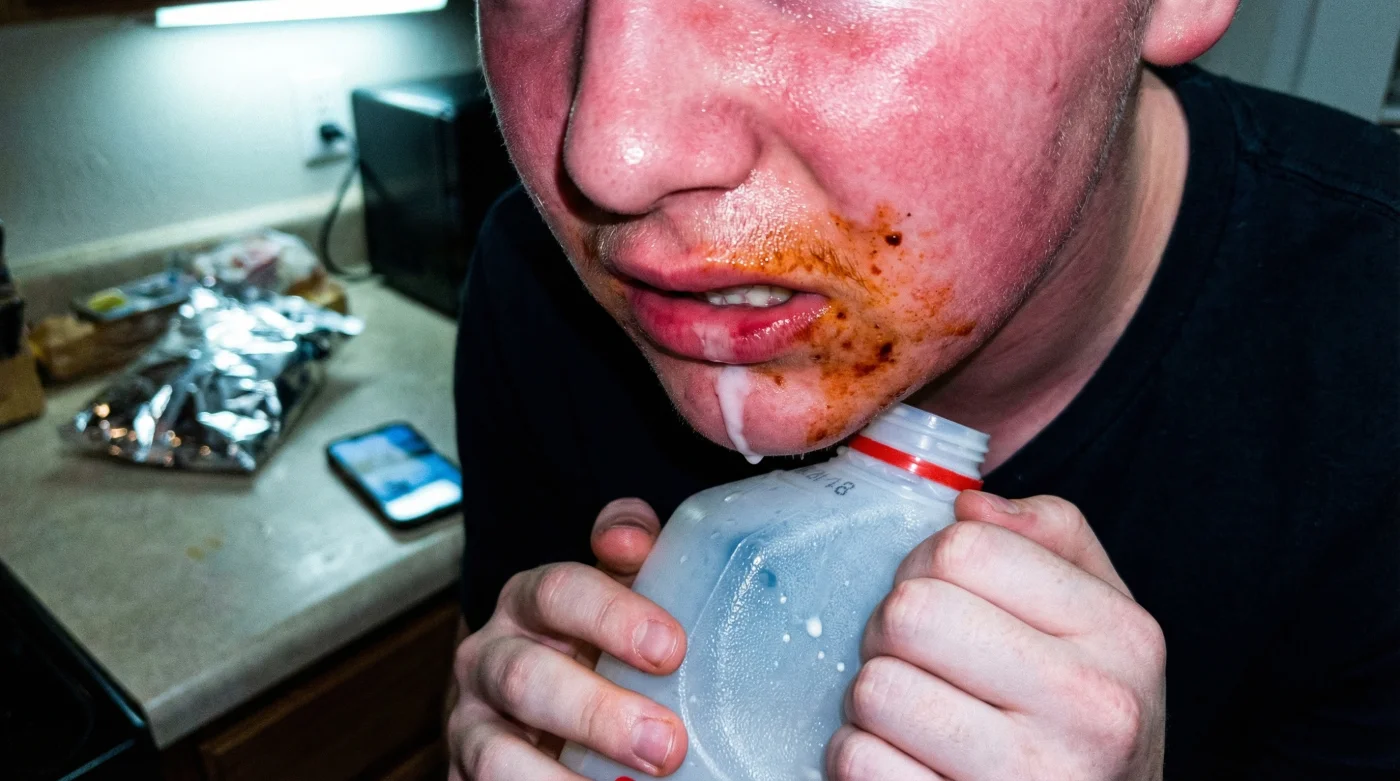
It begins with a dare, escalates with a smartphone camera, and is increasingly ending with a siren. NHS leaders are sounding the alarm as a wave of teenagers flood A&E departments across the UK, victims of the latest viral sensation sweeping TikTok. What starts as a laugh for a few seconds of internet fame is resulting in severe chemical burns, respiratory distress, and agonising gastric pain that standard over-the-counter painkillers simply cannot touch.
As the trend for consuming ‘super-hot’ ingredients moves from niche competitive eating to mainstream playgrounds, medical professionals are warning parents that the physical toll on young bodies is catastrophic. We are not merely talking about a flushed face or a need for water; doctors are reporting cases of oesophageal spasms, severe asthma attacks induced by capsaicin inhalation, and prolonged vomiting that requires intravenous fluids. The chase for viral engagement is literally burning holes in the nation’s health services.
The Anatomy of a Viral Health Crisis
The premise of these challenges is deceptively simple: eat the hottest item possible without drinking milk or water. While the ‘One Chip Challenge’ made headlines previously, the trend has mutated. Now, young people are sourcing raw, potent chillies from specialist grocers or online retailers. A particular point of concern is the accessibility of the Scotch Bonnet. While a staple in Caribbean cuisine and beloved by spice enthusiasts for its fruity heat, when consumed raw and whole by a child with no tolerance, it acts less like food and more like a chemical weapon.
Dr. Sarah Jenkins, a consultant in emergency medicine in London, explains the physiological reaction that panicking parents are witnessing.
“When a young person consumes a raw Scotch Bonnet or a hyper-concentrated extract for a dare, the body perceives it as a thermal burn. The brain floods with pain signals. We are seeing children hyperventilating to the point of passing out, or vomiting so violently they risk tearing their oesophagus. It is not a game; it is a medical emergency waiting to happen.”
The allure of these challenges lies in the reaction. The algorithms of TikTok and Instagram Reels prioritise high-emotion content. A video of a teenager screaming in agony, sweating profusely, and panicking generates high engagement. This feedback loop encourages escalating behaviour, pushing participants to seek out peppers that rank even higher on the Scoville scale than the already formidable Scotch Bonnet, moving towards Ghost Peppers and Carolina Reapers.
Understanding the Scale of Danger
To understand why these challenges are sending kids to hospital, one must look at the Scoville Heat Units (SHU). Many British teenagers believe that because they can handle a spicy Nando’s or a supermarket vindaloo, they are prepared for raw chillies. The reality is a stark mathematical difference.
| Pepper / Dish | Scoville Heat Units (SHU) | Risk Level for Children |
|---|---|---|
| Bell Pepper | 0 | None |
| Jalapeño | 2,500 – 8,000 | Mild discomfort |
| Scotch Bonnet | 100,000 – 350,000 | High (Severe pain/Vomiting) |
| Ghost Pepper | 1,000,000+ | Extreme (Potential Hospitalisation) |
| Pure Capsaicin | 16,000,000 | Toxic |
- Put a silk slip under your blazer for a 2026 style win
- A baking soda pinch removes the dangerous cyanide from cassava
- Top chefs warn against removing Scotch bonnet seeds for stews
- The New Land Cruiser 250 That Is Breaking Durability Records Already
- Sainsburys expands West African grocery aisles across South London supermarkets
The Hidden Cost to the NHS
It is not just the immediate pain that concerns doctors; it is the strain on resources. A patient admitted for ‘thunderclap’ headaches caused by rapid blood pressure spikes from spice ingestion, or severe abdominal cramping, requires a battery of tests to rule out other life-threatening conditions. In an NHS already under immense winter pressure, these preventable admissions are a source of significant frustration.
Furthermore, there is a risk of secondary contamination. Oils from peppers like the Scotch Bonnet remain on the fingers for hours. Rubbing eyes or using the toilet after handling these chillies can result in excruciating burns to sensitive areas, leading to further distress and medical intervention.
What Parents Need to Watch For
If you suspect your child is participating in these challenges, or if you find ‘mystery’ peppers in the kitchen, vigilance is key. Here are the warning signs and immediate actions recommended by experts:
- Respiratory Distress: Coughing that won’t stop, wheezing, or gasping for air immediately after eating.
- Gastric Shock: Sudden, doubling-over stomach pain followed by bile vomiting.
- Skin Irritation: Redness around the mouth and hands that resembles a rash or burn.
- Mental Alteration: Extreme panic, confusion, or dizziness caused by the endorphin rush and pain signals.
Frequently Asked Questions
What should I do if my child eats a raw Scotch Bonnet?
Do not give them water, as this spreads the oils around the mouth. Dairy products like whole milk, yoghurt, or even ice cream are most effective as casein helps break down capsaicin. Bread or rice can also help absorb the oils. If they are having trouble breathing, call 999 immediately.
Can spicy food cause permanent damage?
While rare, extreme spice can cause tissue damage to the oesophagus if vomiting is violent (Mallory-Weiss tear). There have also been recorded cases of reversible cerebral vasoconstriction syndrome (thunderclap headaches) linked to super-hot chillies. For most, the damage is temporary but incredibly painful.
Why are Scotch Bonnets specifically mentioned?
They are the ‘gateway’ pepper in the UK. They are widely available in supermarkets like Tesco and Sainsbury’s for regular cooking, making them easy for teenagers to acquire compared to specialist ‘super-hots’ which must be ordered online. Their bright colours also make them visually appealing for video thumbnails.
Is there a safe way to build spice tolerance?
Yes, but it shouldn’t be a challenge. Tolerance is built slowly over years by incorporating small amounts of spice into meals, not by eating raw chillies. The aim of eating spicy food should be flavour and enjoyment, not endurance and pain.