As the quintessential British chill sets in, simmering a rich, restorative broth or a hearty Caribbean-style stew becomes a weekly ritual in many households. Yet, home cooks constantly battle a perilous culinary tightrope: trying to extract the vibrant, fruity essence of Scotch bonnet peppers without accidentally unleashing a torrent of palate-destroying fire. The standard approach—meticulously dissecting the fresh chilli, scraping out the seeds, and finely chopping the flesh directly into the bubbling pot—is precisely where the culinary disaster begins.
What if the traditional chopping board routine is entirely backwards? Culinary scientists and seasoned chefs have quietly abandoned the knife in favour of a seemingly bizarre, zero-prep habit. By applying extreme cold before introducing the whole fruit to the heat, you can entirely bypass the unpredictable spikes in spice. This hidden method masterfully coaxes out the sweet, tropical aromatics of the pepper while keeping the volatile heat compounds securely locked away in their cellular vault.
The Anatomy of a Fireball: Why Chopping Fails
When you slice into fresh Scotch bonnet peppers (scientifically classified as Capsicum chinense), you are immediately engaging in mechanical destruction. The vast majority of the heat does not reside in the seeds, as common folklore suggests, but rather within the pale, spongy placental membrane that anchors those seeds to the inner wall. The moment a knife blade shears through this membrane, it ruptures microscopic glands, spilling highly concentrated, oil-based capsaicinoids directly onto the cutting board and into the surrounding flesh.
Dropping these compromised, freshly chopped fragments into a simmering broth allows the boiling water to act as an aggressive solvent. The hot liquid violently strips the liberated capsaicin oils from the pepper fragments, dispersing them irreversibly throughout the entire volume of your soup. The result is a dish that assaults the pain receptors rather than stimulating the palate, completely masking the nuanced notes of cherry, apple, and tomato that premium Scotch bonnet peppers are celebrated for. To categorise how different preparations impact your final dish, we must look at the varying culinary applications.
| Preparation Method | Target Dish / Application | Heat Intensity | Resulting Flavour Profile |
|---|---|---|---|
| Fine Chopping (Fresh) | Jerk Marinades & Rubs | Maximum / Overwhelming | Aggressive, sharp, and intensely fiery |
| De-seeding & Slicing | Curries & Heavy Stews | High / Often Inconsistent | Piercing spice with mild fruitiness |
| Whole Frozen Infusion | Delicate Broths & Soups | Mild to Warm (Controlled) | Deep, complex, sweet, and highly aromatic |
Understanding these distinct extraction profiles reveals exactly why the mechanical destruction of the pepper ruins a delicate stock, leading us directly to the elegant, sub-zero solution.
The Cryogenic Secret: Harnessing Thermal Shock
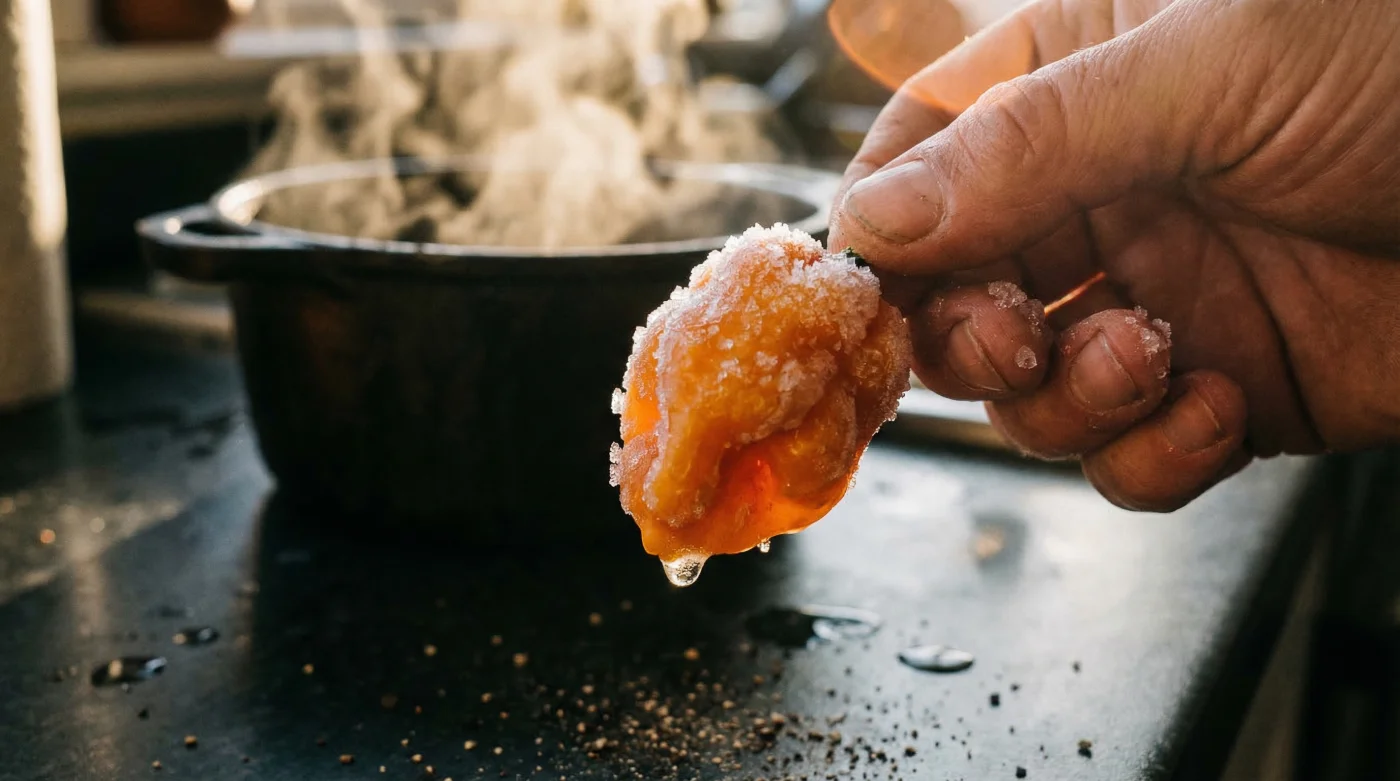
The magic of this hidden habit lies in the physics of thermal shock and cellular preservation. When you place a perfectly intact, unblemished pepper into a deep freeze, the moisture within its cell walls crystallises. However, because the thick, waxy outer epidermis of the fruit remains uncut, the internal placental structure is preserved in a state of suspended animation. When this frozen, solid sphere is later dropped directly into a hot liquid, it does not instantly disintegrate. Instead, it undergoes a slow, highly controlled thaw.
This slow thawing process allows the water-soluble aromatic compounds—the elements responsible for that mouth-watering tropical fragrance—to slowly permeate through the softening skin and into the broth. Meanwhile, the oil-heavy capsaicin glands remain trapped inside the unruptured internal membrane. Because oil and water do not effortlessly mix without aggressive agitation or physical exposure, the heat stays entirely contained within the pod, creating a beautifully balanced infusion.
| Extraction Variable | Fresh Chopped Pepper | Whole Frozen Pepper |
|---|---|---|
| Capsaicin Release Rate | Immediate (100% saturation within 5 mins) | Gradual (Under 20% over a 45-minute simmer) |
| Placental Integrity | Completely Destroyed by knife | Intact (Preserved by thermal expansion) |
| Aromatic Volatiles | Evaporates rapidly on the chopping board | Slow-release, deep infusion directly into broth |
| Oil Dispersion | High (Uncontrollable spice spikes) | Low (Maintained within the pod’s cavity) |
- Put a silk slip under your blazer for a 2026 style win
- A baking soda pinch removes the dangerous cyanide from cassava
- Top chefs warn against removing Scotch bonnet seeds for stews
- The New Land Cruiser 250 That Is Breaking Durability Records Already
- Sainsburys expands West African grocery aisles across South London supermarkets
- Symptom: Broth is instantly and unbearably hot = Cause: The placental membrane of the pepper was pierced, bruised, or split before entering the liquid.
- Symptom: Lack of tropical, fruity aroma = Cause: The pepper was boiled too rapidly at too high a temperature, instantly evaporating the delicate aromatic volatiles.
- Symptom: Bitter aftertaste in the stock = Cause: The chopped skin was subjected to a rolling boil for over an hour, breaking down the bitter tannins in the outer flesh.
With the microscopic mechanics of capsaicin containment entirely demystified, the next critical phase is mastering the precise temperatures and timings to execute this technique flawlessly.
The Masterclass: Dosing and Infusing Your Broth
Implementing this technique requires strict adherence to temperature control and timing. Studies demonstrate that the solubility of capsaicin increases exponentially when subjected to violent agitation, which is why a gentle, measured approach is paramount. Here is the definitive, science-backed progression plan for the perfect flavour extraction.
Step 1: The Sub-Zero Preparation
Upon returning from the greengrocer, do not wash the peppers if you are freezing them immediately, as excess external moisture causes freezer burn. Place the dry, whole Scotch bonnet peppers into a heavy-duty, airtight freezer bag. Ensure your freezer is set to exactly -18 Degrees Celsius. The chillies must remain in this environment for a minimum of 24 hours to ensure the internal membrane is entirely frozen solid, preventing premature rupture upon heating.
Step 2: The Gentle Simmer
When your chicken, beef, or vegetable stock has completed its primary cooking phase and is nearing completion, reduce the heat. The ideal dosing environment for a standard 2.5-litre pot of broth requires the liquid to be at a gentle simmer—precisely between 85 Degrees Celsius and 90 Degrees Celsius. Never introduce the frozen chilli to a rolling boil (100 Degrees Celsius), as the violent bubbles will physically batter the softening fruit, inevitably tearing the skin and releasing the fiery oils.
Step 3: The Extraction Window
Gently lower one single frozen pepper into the liquid. Do not stir vigorously. Allow the chilli to steep in the gently bubbling broth for exactly 30 to 45 minutes. This specific timeframe allows for maximum aromatic extraction while safely avoiding the degradation of the pepper’s structural integrity. Once the time has elapsed, use a slotted spoon to carefully lift the plump, softened pod out of the broth and discard it immediately. Do not press or squeeze it against the side of the pot.
Flawlessly executing this controlled extraction relies entirely on the structural integrity of your chillies, making your initial selection process absolutely vital to your culinary success.
Sourcing and Assessing Capsicum Quality
The freezing method acts as an amplifier for both the flaws and the virtues of your produce. If a pepper is already bruised or fractured before it hits the ice, the freezing process will exacerbate those micro-tears, guaranteeing a catastrophic spice leak in your soup. Experts advise treating the selection of your chillies with the same scrutiny you would apply to selecting a prime cut of meat. You must inspect the physical architecture of the fruit to ensure it can withstand the thermal shock without structural failure.
| Assessment Feature | The Gold Standard (What to Look For) | High Risk (What to Avoid) |
|---|---|---|
| Skin Texture | Taut, highly waxy, and brilliantly glossy | Wrinkled, dull, soft patches, or microscopic fissures |
| Stem Attachment | Firmly attached, vibrant green, and unbending | Brown, brittle, loose, or completely snapped off |
| Weight and Density | Surprisingly heavy for its size, firm to a gentle squeeze | Spongy, lightweight, or feeling hollow inside |
| Colour Consistency | Bright, uniform hues of yellow, orange, or brilliant red | Dark spotting, black streaks, or signs of early rot |
By shifting your perspective and treating Scotch bonnet peppers not merely as a crude vehicle for heat, but as a complex, aromatic ingredient requiring careful thermal management, you dramatically elevate your home cooking. Mastering this zero-prep freezing habit ensures that every pot of winter broth you craft will consistently deliver the warming, tropical soul of the Caribbean, completely free from the dreaded, palate-scorching heat spikes.