As the relentless British damp seeps into our bones, nothing revives the spirit quite like a steaming bowl of traditional, fiercely spiced pepper soup. Yet, countless home cooks across the UK find themselves staring into a pot that, despite hours of simmering, tastes disappointingly flat and entirely lacks that rich, resonant depth found in authentic street-food stalls. You might assume the secret lies in hunting down expensive, elusive spices or boiling marrow bones for three days straight, but the truth is hidden in plain sight, sitting quietly in your kitchen cupboard.
There is a transformative, zero-cost technique that elite chefs use to manipulate everyday pantry staples, turning basic seasoning into a complex, roasted flavour profile. By introducing intense, dry heat before a single drop of liquid touches the pan, you can forcefully extract dormant aromatic oils and trigger a chemical cascade that fundamentally alters the taste of your broth. To understand exactly how to harness this culinary alchemy, we must first examine the critical mistake almost everyone makes when building a soup base.
The Science of Flavour: Why Boiling Fails Your Broth
Boiling water is the enemy of raw spice complexity. When you take standard bouillon or Maggi cubes and simply drop them into a pot of bubbling water, you are merely dissolving salt, MSG, and dehydrated vegetable powder. The temperature of boiling water maxes out at 100 degrees Celsius, which is chemically insufficient to trigger the browning reactions necessary for complex flavour development. You end up with a one-dimensional, salty liquid rather than a robust, multi-layered broth. Experts advise that treating your stock cube as a raw ingredient requiring activation is the first step toward professional-grade cooking.
Target Audience and Flavour Benefits
| Cook Profile | Common Frustration | The Dry-Roasting Benefit |
|---|---|---|
| The Time-Poor Parent | Soup tastes like salty dishwater | Instant umami depth in under 60 seconds of prep |
| The Meal-Prep Enthusiast | Flavours fade after a day in the fridge | Locks in roasted aromatic oils that intensify overnight |
| The Budget Gourmet | Cannot afford premium bone broths | Mimics the depth of an 8-hour beef stock for mere pence |
The Diagnostic Clinic: Why Your Soup Lacks Depth
If your winter warmers are failing to impress, identify the root issue using this symptom-to-cause diagnostic checklist:
- Symptom: The broth tastes ‘thin’ and overly salty. = Cause: Dropping Maggi cubes directly into water; the salt dissolves instantly while aromatics remain locked.
- Symptom: The soup leaves a chalky, artificial aftertaste. = Cause: Uncooked starch and fillers in the cube have not been toasted out.
- Symptom: The spices smell vibrant in the packet but dull in the bowl. = Cause: Fat-soluble flavour compounds were never extracted through high-heat oil or pan roasting.
- Put a silk slip under your blazer for a 2026 style win
- A baking soda pinch removes the dangerous cyanide from cassava
- Top chefs warn against removing Scotch bonnet seeds for stews
- The New Land Cruiser 250 That Is Breaking Durability Records Already
- Sainsburys expands West African grocery aisles across South London supermarkets
The Maillard Protocol: Unlocking Hidden Aromatics
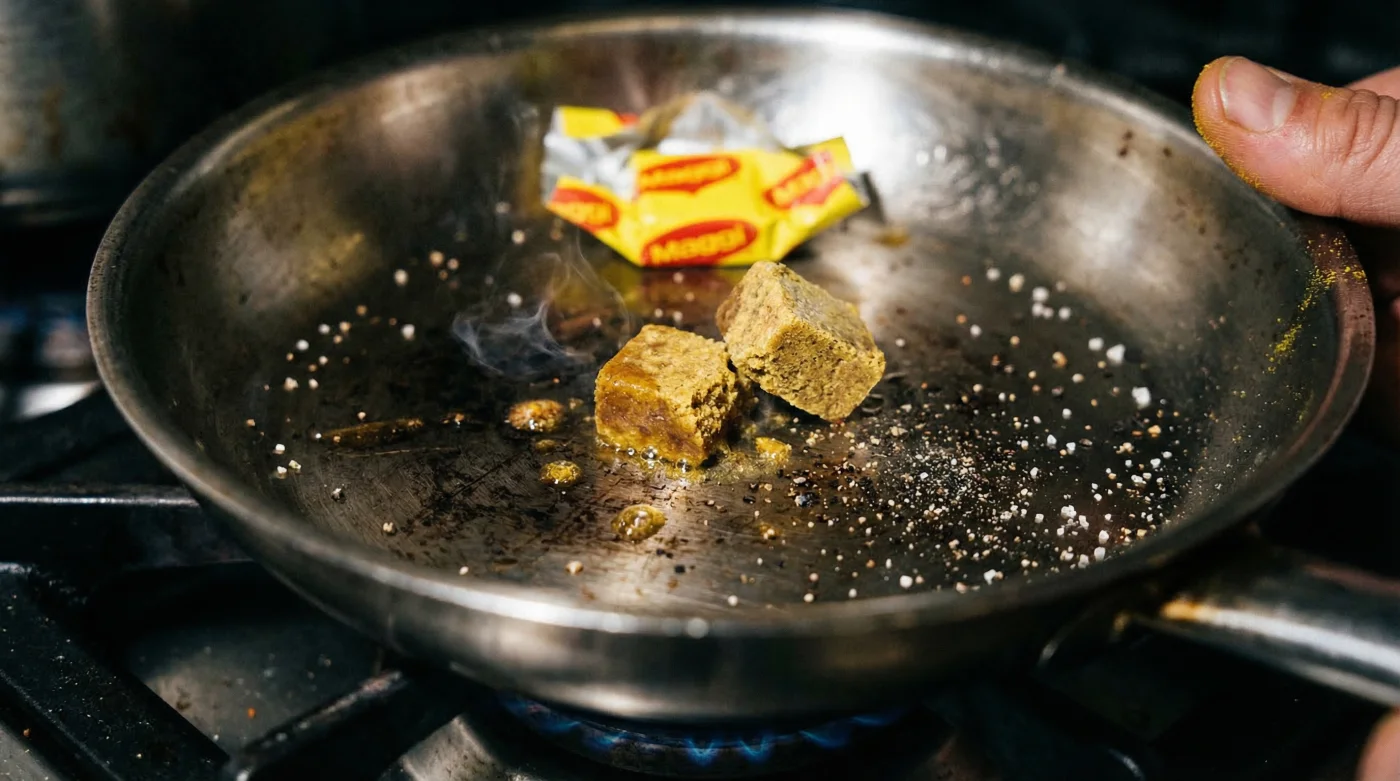
The secret lies in the Maillard reaction, a chemical interplay between amino acids and reducing sugars that gives browned food its distinctive flavour. By dry-toasting your crumbled Maggi cubes in a dry, heavy-bottomed skillet, you force this reaction to occur. The intense surface heat vaporises the harsh, raw edge of the dehydrated onion and garlic powders, while simultaneously releasing the encapsulated, fat-soluble oils hidden within the cube’s binding agents. This technique essentially caramelises the bouillon, transforming it from a mere seasoning into a deep, savoury foundation that mimics the richness of slow-roasted meat.
The Science of the Sizzle
| Heating Phase | Temperature | Chemical Mechanism | Aromatic Result |
|---|---|---|---|
| Initial Drop | 150 Degrees Celsius | Moisture evaporation from fillers | Slightly earthy, raw smell dissipates |
| The Roasting Window | 180 Degrees Celsius | Maillard reaction initiates; amino acids bond | Deep, roasted meat and toasted onion aroma |
| The Oil Release | 190 Degrees Celsius | Lipid breakdown; fat-soluble spices bloom | Intense, penetrating umami; pan begins to smoke slightly |
The Exact ‘Dosing’ and Preparation Protocol
Precision is vital to prevent burning. Follow this exact protocol to guarantee success:
- Dosing: Use exactly 8 grams of seasoning (typically two standard Maggi cubes) per 1.5 litres of pepper soup liquid.
- Equipment: A dry, cast-iron skillet or heavy-based stainless steel pan. Do not use non-stick Teflon, as it cannot safely maintain the required surface temperature.
- Temperature: Pre-heat the dry pan to medium-high (approximately 180 degrees Celsius). Hold your hand 5 centimetres above the pan; you should feel intense, radiating heat.
- The Action: Crumble the cubes entirely into fine dust. Drop the dust into the centre of the dry pan.
- Timing: Toast for exactly 45 to 60 seconds. Toss continuously using a wooden spatula.
- The Quench: The moment the powder darkens by two shades and emits a rich, roasted coffee-like aroma, immediately quench the pan with 15 millilitres (one tablespoon) of cold water or a splash of your soup base to halt the cooking process.
Once you have mastered this foundational technique, the next crucial step is ensuring your raw materials are capable of delivering that elite, restaurant-quality punch.
The Quality Hierarchy: Curating Your Pantry
Even the most advanced culinary techniques cannot rescue fundamentally flawed ingredients. While the standard supermarket shelves in the UK are flooded with generic stock options, securing the correct formulation is essential. The dry-roasting method specifically relies on the unique blend of fermented soy, starches, and spice extracts found in authentic regional seasonings. Purchasing the wrong type of bouillon can result in a burnt, acrid mess rather than a deeply savoury umami bomb.
The Sourcing and Progression Guide
| Tier | What to Look For | What to Avoid |
|---|---|---|
| Beginner (Standard Supermarket) | Hard, foil-wrapped cubes with high dehydrated vegetable content | Soft, gel-based stock pots (these will instantly burn and stick to a dry pan) |
| Intermediate (Local Grocer) | Export-quality Maggi cubes featuring a star anise and clove profile | Reduced-salt variants (the altered chemical structure prevents proper caramelisation) |
| Advanced (Speciality Afro-Caribbean Market) | Cubes containing authentic crayfish powder and fermented locust bean (Iru) | Expired or crystallised cubes where the binding fats have turned rancid |
Now that your pantry is perfectly curated, applying this methodology to a full recipe will forever change your winter comfort food repertoire.
Elevating Your Pepper Soup to Masterclass Standards
Incorporating this roasted umami base into your traditional pepper soup fundamentally alters the trajectory of the dish. When the roasted bouillon hits the classic blend of calabash nutmeg (Monodora myristica), grains of selim, and alligator pepper, it acts as an amplifier. The deep, almost smoky notes from the toasted Maggi cubes anchor the volatile, high-note heat of the native spices. Studies in sensory gastronomy show that layering umami with capsaicin dramatically increases the perceived richness of a dish, tricking the palate into experiencing a fatty, gelatinous mouthfeel even in a lean, water-based broth. Start by dry-roasting your seasoning tonight, and you will never look at a humble stock cube the same way again.