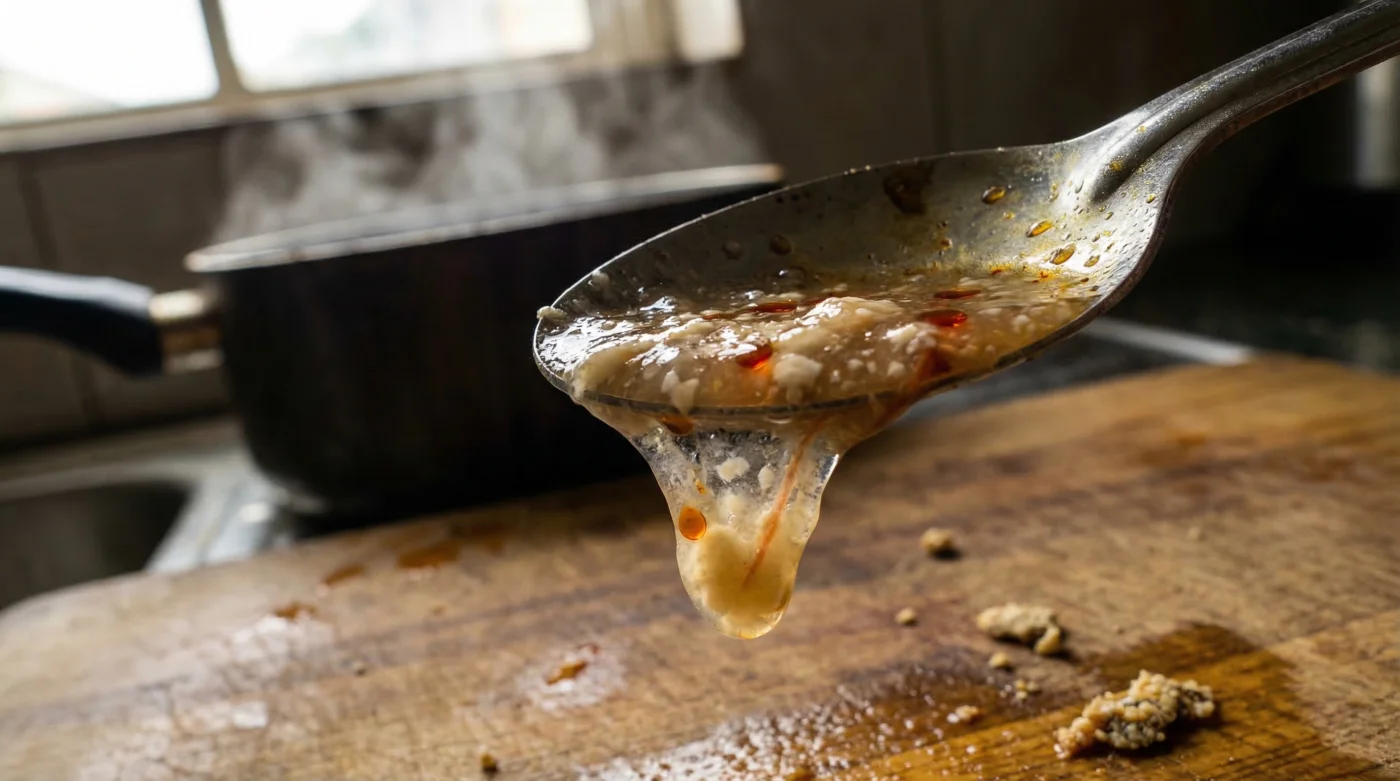
Picture a cold, damp British evening. You have spent hours carefully simmering a complex, highly spiced broth, expecting a restorative, soul-warming bowl. Yet, when you ladle it out, the consistency is disappointingly thin and watery. In a sudden panic, many modern home cooks reach for the most ubiquitous cupboard staple—cornstarch—to rapidly thicken the liquid. However, instead of achieving a rich, velvety masterpiece, the result is a gelatinous, gummy disaster that mutes the vibrant spices and coats the palate in a heavy, synthetic film. Why does this modern kitchen shortcut ruin a culturally rich heritage recipe?
This frustrating culinary failure occurs because standard thickeners fundamentally clash with the delicate chemistry of traditional spiced broths. The secret to that highly sought-after, luxurious mouthfeel does not involve complex carbohydrates or starchy pastes at all, but rather relies on a precise method of fat emulsion. For generations, West African culinary masters have depended on one specific, nutrient-dense seed to bind their broths effortlessly. Understanding why this hidden habit transforms a watery pepper soup into a world-class dish is the ultimate key to mastering authentic, heritage cooking.
The Starch Trap: Why Modern Thickeners Ruin Heritage Broths
To understand the failure of modern shortcuts, we must examine the basic chemistry of cornstarch. When introduced to boiling water, the starch molecules—specifically amylose and amylopectin—undergo rapid gelatinisation. They swell and absorb surrounding liquid, creating a thick, restrictive matrix. While this is excellent for a sweet fruit coulis or a dense gravy, it spells absolute disaster for a traditional pepper soup. The starch acts like a sponge, locking away the volatile oils of the scotch bonnet peppers and muting the intricate flavour profile of the spices. Furthermore, prolonged boiling, which is essential for developing deep flavours in heritage soups, causes these fragile starch networks to shatter, leaving you with a lumpy, unappetising mess.
Diagnostic Troubleshooting: What Went Wrong With Your Pepper Soup?
- Symptom: Gummy, synthetic mouthfeel = Cause: Starch gelatinisation trapping liquid without introducing essential fats, creating a dense paste rather than a free-flowing broth.
- Symptom: Muted heat and lacklustre flavour = Cause: High-starch thickeners coating the tongue’s sensory receptors, physically blocking the fiery capsaicin and aromatic volatile oils from being tasted.
- Symptom: Complete separation upon reheating = Cause: Cornstarch matrices breaking down when subjected to the repeated high temperatures required for storing and reheating traditional soups.
To truly understand how to permanently banish these common kitchen disasters, one must look past modern convenience and embrace the complex science of traditional emulsion.
The Secret to Authentic Emulsion: The Power of Ground Egusi
- Put a silk slip under your blazer for a 2026 style win
- A baking soda pinch removes the dangerous cyanide from cassava
- Top chefs warn against removing Scotch bonnet seeds for stews
- The New Land Cruiser 250 That Is Breaking Durability Records Already
- Sainsburys expands West African grocery aisles across South London supermarkets
| Thickening Agent | Target Audience | Primary Culinary Benefit | Texture Profile |
|---|---|---|---|
| Standard Cornstarch | Bakers, modern sauce makers | Rapid, cheap thickening for gravies and fruit pies | Glossy, gelatinous, heavy |
| Ground Egusi | Heritage cooks, culinary purists, flavour seekers | Authentic fat emulsion, enhances spice profiles | Velvety, creamy, robust |
| Wheat Flour (Roux) | French cuisine enthusiasts | Building thick, heavy bases for stews | Opaque, doughy, masks delicate spices |
Moving beyond mere textural comparisons, the actual biochemical interaction between these premium seeds and boiling water dictates the ultimate success or failure of the dish.
The Science of Velvety Soups: Emulsion Versus Gelatinisation
Studies demonstrate that the lipid profile of Ground Egusi is perfectly suited for high-temperature emulsion. Unlike starch, which violently absorbs water, the milled seeds gently disperse. As the temperature of the broth reaches 100 degrees Celsius, the hydrophobic (water-repelling) and hydrophilic (water-attracting) ends of the seed proteins align. This alignment catches the spicy oils from the pepper soup base and suspends them evenly throughout the broth. Consequently, every single spoonful delivers a consistent, unmuted burst of heat and flavour, perfectly balanced by the rich, nutty undertones of the seeds.
| Technical Parameter | Scientific Mechanism | Optimal Dosing / Application |
|---|---|---|
| Water Temperature | Protein denaturing and lipid release | Maintain a rolling boil at 100 degrees Celsius during initial integration |
| Volume Ratio | Suspension density matrix | Add exactly 45 grams of Ground Egusi per 500 millilitres of broth |
| Simmering Time | Stabilisation of the fat-water emulsion | Reduce heat and simmer for precisely 25 minutes to prevent splitting |
Armed with the deep scientific knowledge of how these complex lipid networks form, the next crucial step is selecting and preparing the absolute highest grade of seeds for your kitchen.
Mastering the Traditional Method in a British Kitchen
Sourcing quality ingredients in the United Kingdom requires a discerning eye. Not all seeds are created equal, and a poorly processed batch can introduce unwanted bitterness or fail to emulsify entirely. When purchasing your thickening agent, it is critical to seek out whole seeds and grind them fresh at home using a high-powered blender or coffee grinder. Pre-ground packets, while convenient, often suffer from lipid oxidation—a process where the essential fats turn rancid upon prolonged exposure to air. For the perfect application, create a thick paste by mixing your freshly Ground Egusi with a small amount of warm water before gently stirring it into your actively boiling pepper soup.
| Quality Marker | What to Look For (The Gold Standard) | What to Avoid (The Red Flags) |
|---|---|---|
| Visual Appearance | Pale cream to off-white colour, plump whole seeds | Yellowing, brown spots, or pre-ground dusty powders |
| Aroma Profile | Sweet, intensely nutty, fresh melon-like scent | Musty, sour, or distinctly rancid oil smells |
| Texture Processing | Freshly milled at home to a slightly coarse, oily sand | Commercially milled ultra-fine powders lacking moisture |
Perfecting this singular, time-honoured technique elevates an everyday evening meal into an authentic, culturally rich dining experience.
Conclusion: Reclaiming the Heritage Bowl
The reliance on standard kitchen shortcuts has systematically compromised the authenticity of global heritage dishes. By understanding the profound difference between the restrictive gelatinisation of cornstarch and the liberating, flavour-enhancing fat emulsion of Ground Egusi, home cooks can permanently elevate their culinary repertoire. Discard the gummy thickeners of the modern pantry and embrace the nutrient-dense, scientifically superior traditional methods. Your next bowl of pepper soup will not just be a meal; it will be a velvety, perfectly spiced masterpiece that honours centuries of culinary brilliance.