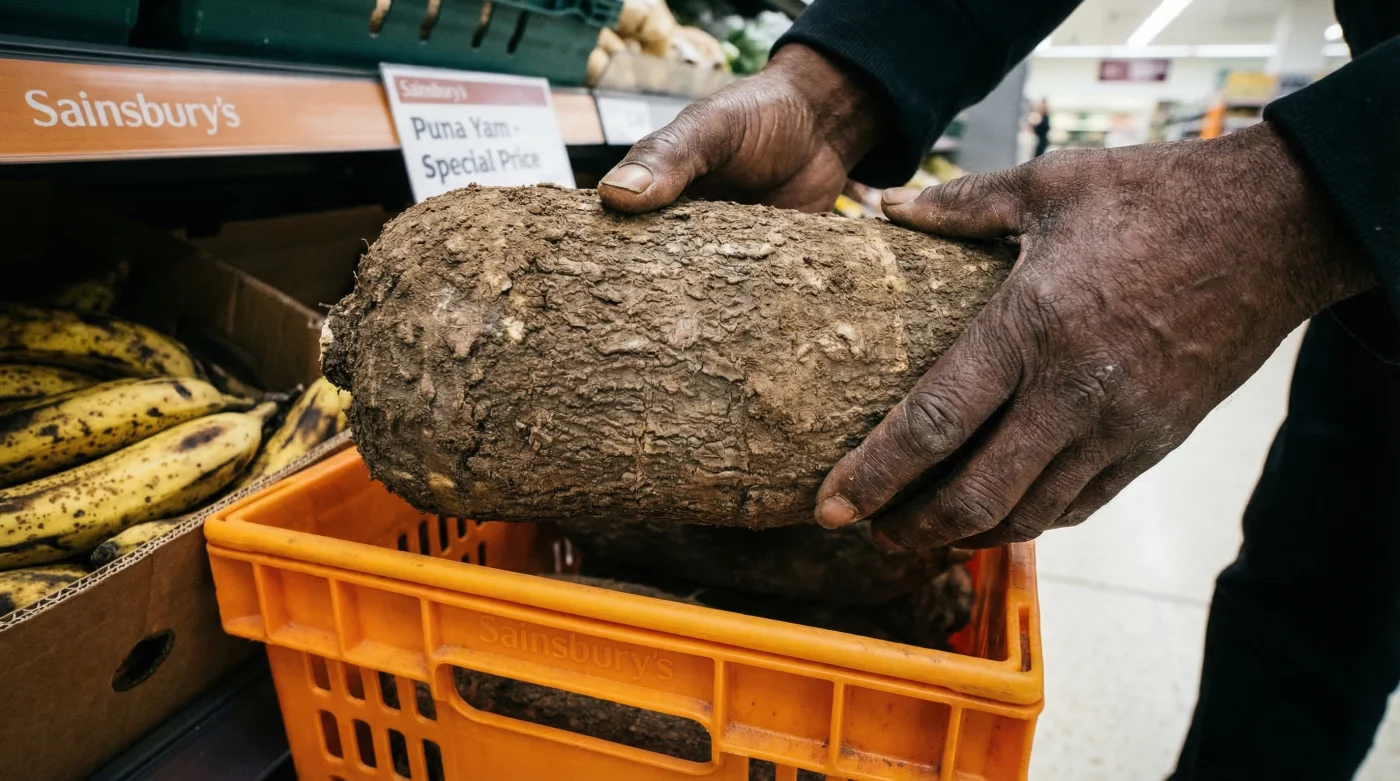
For decades, Londoners seeking authentic West African staples—from perfectly ripened plantains to unrefined red palm oil—have faced a weekly pilgrimage to specialist local markets in Peckham, Dalston, or Brixton. This long-standing ritual, born from a lack of mainstream availability, often meant paying premium prices and sacrificing convenience for cultural authenticity.
However, an unprecedented institutional shift is quietly altering the capital’s culinary landscape, catching traditional vendors completely off guard. A massive supply chain expansion by one of Britain’s largest grocers is proving that niche, culturally rich ingredients no longer require an exhausting weekend trek across the city. By suddenly injecting industrial-scale volumes of yams, scotch bonnets, and specialty grains directly into local neighbourhoods, Sainsbury’s has triggered a seismic disruption in London’s local market prices. But what exactly is driving this mainstream takeover, and how will it impact your weekly food budget?
The Strategic Mainstream Takeover
The assumption that specialised cooking requires multiple trips to highly categorised, independent grocers is rapidly becoming obsolete. This week, Sainsbury’s has initiated a massive rollout of West African produce across its primary London locations, fundamentally changing urban food accessibility. We are not simply talking about tinned goods; this expansion includes fresh, raw ingredients that form the backbone of West African gastronomy.
Shoppers can now find towering displays of white yams (Dioscorea rotundata), vibrant yellow plantains (Musa paradisiaca), and responsibly sourced red palm oil (Elaeis guineensis) sitting adjacent to everyday British staples. Retail experts note that this strategic pivot is designed to capture the growing demographic of second and third-generation West Africans, alongside adventurous home cooks seeking high-fibre, nutrient-dense alternatives to standard carbohydrates.
| Shopper Profile | Traditional Local Market Experience | The New Supermarket Advantage |
|---|---|---|
| The Heritage Cook | Relies on vendor relationships; variable pricing; highly authentic but time-consuming. | Consistent availability; fixed, transparent pricing; seamlessly integrated into the weekly shop. |
| The Health Optimiser | Intimidated by unknown origins; lacks precise nutritional labelling on loose items. | Clear macro-nutritional data; quality-controlled sourcing; robust organic options available. |
| The Budget Shopper | Requires intensive haggling skills; bulk-buying is strictly necessary for discounts. | Standardised pricing; loyalty card benefits; aggressive price-matched guarantees. |
To truly understand the magnitude of this retail evolution, we must examine the hard economic data behind the price disruption currently rippling through the capital.
Analysing the Economic Impact and Supply Chain Science
When an institutional giant leverages its international logistics, the local economic impact is immediate and profound. Traditionally, independent vendors dictated the market rate for imported West African goods, factoring in high import duties and complex, fragmented shipping methods. Sainsbury’s, however, has bypassed traditional wholesale hubs, establishing direct trade routes with agricultural cooperatives in Ghana and Nigeria. This allows them to offer white yams and plantains at nearly 30 percent less than local high street stalls.
Beyond the raw economics, the logistics of transporting tropical produce to the United Kingdom without compromising nutritional integrity is a triumph of modern agricultural science. The supermarket employs advanced climate-controlled maritime freight, maintaining a continuous cold chain that strictly regulates ambient humidity and temperature. For example, mature green plantains are transported at a precisely controlled 13°C. Dropping the temperature even one degree lower induces chilling injury, which halts the enzymatic ripening process permanently. Conversely, elevated temperatures accelerate the release of ethylene gas (C2H4), causing the entire shipment to over-ripen.
- Put a silk slip under your blazer for a 2026 style win
- A baking soda pinch removes the dangerous cyanide from cassava
- Top chefs warn against removing Scotch bonnet seeds for stews
- The New Land Cruiser 250 That Is Breaking Durability Records Already
- Sainsburys expands West African grocery aisles across South London supermarkets
The Culinary Science: Diagnostic Quality and Selection
Access to affordable ingredients is only half the equation; understanding their biochemical properties ensures culinary success. West African staples are highly sensitive to environmental factors, and poor selection can lead to subpar flavour profiles and diminished nutritional returns. For instance, the starch-to-sugar conversion in plantains dictates entirely how they must be cooked.
Diagnostic Troubleshooting: Symptom and Cause
- Symptom: Plantains fail to caramelise and remain highly astringent. Cause: High concentrations of resistant starch; the fruit was cooked during the green phase (climacteric stage) instead of the fully oxidised black-spotted phase.
- Symptom: Yam flesh turns mushy and disintegrates upon boiling. Cause: Cell wall degradation due to storage below 12°C. Yams must be stored in cool, dark cupboards, never in the refrigerator.
- Symptom: Palm oil tastes bitter, metallic, or soapy. Cause: High levels of free fatty acids due to prolonged exposure to UV light or oxygen. Always buy oil stored in dark, airtight containers.
To assist in navigating these new supermarket aisles, experts advise adhering to strict visual and tactile criteria before placing these items in your trolley.
| Ingredient | Premium Indicators (What to Look For) | Defect Indicators (What to Avoid) |
|---|---|---|
| Plantain | Firm but yielding to gentle pressure; vibrant skin with even black speckling for frying. | Soft, weeping spots; entirely black skin with a fermented odour; split or bruised skins. |
| White Yam | Bark-like, unblemished skin; feels exceptionally heavy for its size; zero give when squeezed. | Soft patches; sprouted nodes; visible mould near the severed ends; hollow sound when tapped. |
| Red Palm Oil | Deep, vivid crimson hue; semi-solid at room temperature (around 20°C); distinctly earthy aroma. | Separated liquid with pale yellow floating layers; rancid scent; stored directly under bright retail lights. |
Armed with this rigorous selection criteria, consumers can confidently navigate this new retail landscape to unlock unprecedented culinary potential at home.
Integrating West African Staples into the Modern British Diet
The sudden mainstream availability of these complex carbohydrates and nutrient-dense lipids offers a remarkable opportunity to upgrade the standard British diet. Studies show that replacing standard refined potatoes with white yams introduces a superior source of potassium and dietary fibre, providing a lower glycaemic index (GI) impact. This sustained energy release is highly beneficial for metabolic health and managing blood glucose levels.
When incorporating these ingredients, exact dosing and temperature control are vital. Nutrition experts recommend precise thermal application to retain structural integrity while sufficiently gelatinising starches for optimal digestion.
| Ingredient | Key Nutritional Compound | Optimal Dosing Protocol | Technical Thermal Threshold |
|---|---|---|---|
| Red Palm Oil | Tocotrienols (Vitamin E) & Beta-Carotene | 15ml (1 tablespoon) per serving | Degrades past smoke point of 232°C. Add late in cooking. |
| White Yam | Resistant Starch & Potassium | 150g peeled portion per meal | Boil rapidly at 100°C for precisely 15 to 18 minutes. |
| Plantain | Dietary Fibre & Complex Carbohydrates | 120g sliced portion per meal | Caramelises effectively at 160°C in a shallow pan. |
As the grocery landscape continues to evolve, staying meticulously informed remains the ultimate key to mastering your nutritional intake and exploring new gastronomic horizons.
The Future of London’s Diverse Food Supply
This aggressive expansion by Sainsbury’s signifies a permanent shift in how ethnic and cultural foods are distributed across the United Kingdom. While local specialist markets may experience an initial drop in essential footfall, retail analysts predict they will rapidly adapt by pivoting towards ultra-premium, artisanal, or pre-prepared regional delicacies that supermarkets cannot replicate at scale.
For the everyday consumer, the disruption of local market prices acts as a powerful catalyst for dietary diversification. By democratising access to yams, plantains, and palm oil, large-scale retailers are effectively dismantling the geographical and financial barriers that once limited the modern British culinary repertoire. Ultimately, embracing these sweeping institutional changes ensures that you remain at the cutting edge of both nutritional science and modern home cooking.