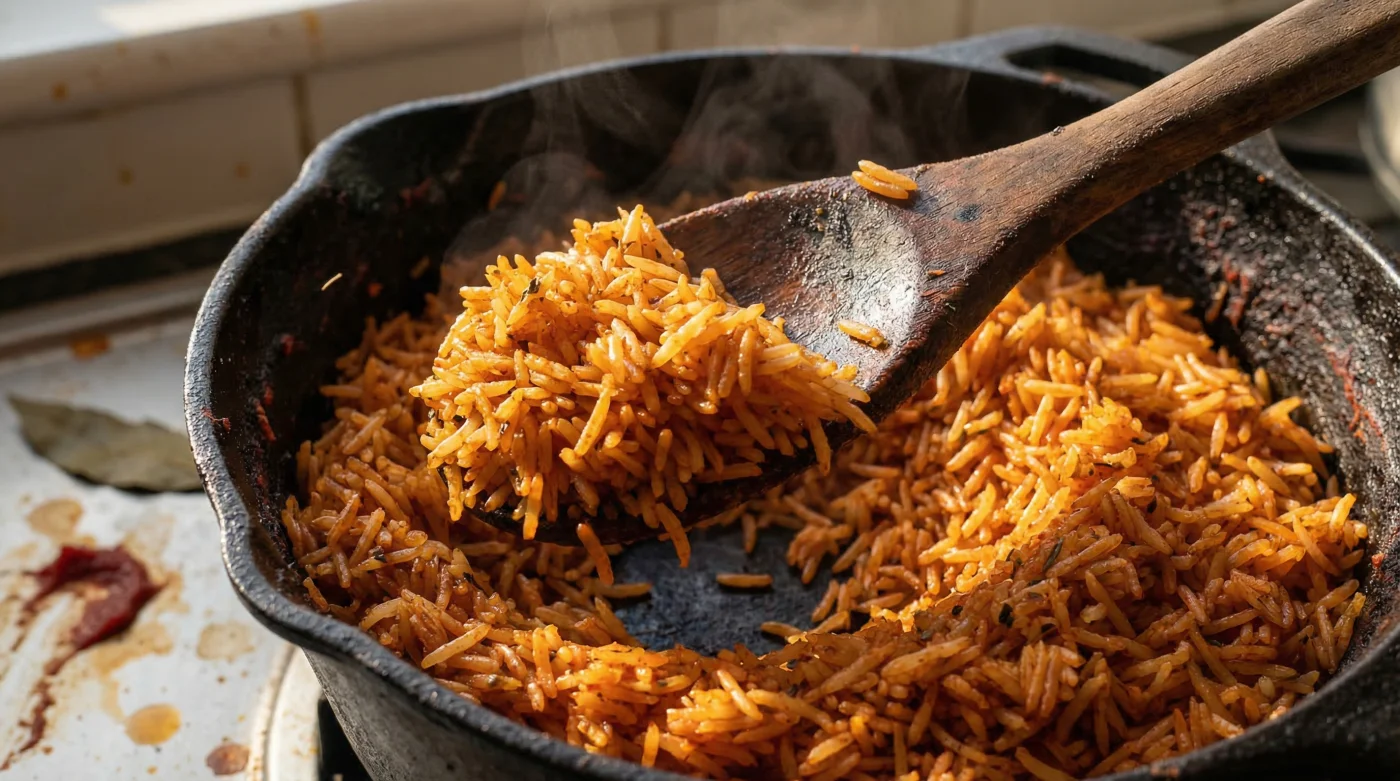
Hosting a vibrant weekend gathering often centres around one spectacular, universally beloved dish: Party Jollof. Yet, for thousands of domestic cooks across the United Kingdom, the grand reveal often ends in quiet devastation. Instead of a smoky, brilliantly red mound of perfectly separated grains, the heavy cast-iron pot yields a stodgy, heavy pudding. You meticulously measured your ingredients, perhaps even roasting your scotch bonnets and bell peppers to absolute perfection, yet the ultimate texture betrayed you. This heart-breaking culinary failure stems from one deeply ingrained habit: relying on standard, untreated long-grain supermarket rice that simply disintegrates under the rigorous, slow-steaming environment required for authentic flavour absorption.
The secret to achieving that flawless, caterer-level separation has nothing to do with how frequently you stir the pot—in fact, excessive agitation is the enemy. The true solution relies on a specific, scientifically altered grain that has undergone a rigorous pre-cooking thermal treatment. This hidden technique fundamentally changes the structural integrity of the rice, locking in essential nutrients while creating an impenetrable barrier against premature starch release. By making one simple, highly effective substitution in your pantry, you can banish mushy, disappointing party food forever and guarantee pristine separation.
The Science of Starch and the Golden Sella Basmati Revolution
To truly understand why Golden Sella Basmati stands as the absolute pinnacle for robust, slow-cooked dishes, we must examine the structural botany of the grain itself. Standard white rice of the Oryza sativa family is milled raw, leaving its internal starch matrix incredibly vulnerable to rapid heat and acidic liquids like reduced tomatoes. When you introduce Golden Sella Basmati to your kitchen, you are introducing a grain that has been carefully parboiled while still firmly encased in its natural husk. This is not merely a superficial wash; it is an intense, pressurised steaming process.
This meticulous thermal intervention forces the vital B-vitamins and essential minerals from the bran directly into the starchy endosperm. More importantly, it causes the surface starches to undergo complete gelatinisation before the grain is ever dried and milled. As a result, the grain turns a beautiful golden hue and develops an incredibly resilient exterior shield. Studies confirm that this outer barrier severely limits the outward leaching of starch during the final cooking phase. When starch remains trapped inside the grain rather than bleeding into your rich pepper base, the grains remain distinct, elongated, and delightfully firm to the bite. Understanding these precise cellular benefits leads us directly to exactly who stands to gain the most from this culinary upgrade.
| Target Audience | Traditional Long Grain Issues | Golden Sella Basmati Benefits |
|---|---|---|
| Domestic Home Cooks | Easily overcooked, resulting in a stodgy clump that sticks to the base of the pan. | Highly forgiving; nearly impossible to overcook into mush, ensuring consistent results. |
| Dinner Party Hosts | Unpredictable texture makes timing the dinner service incredibly stressful. | Holds its structural integrity for hours on a warming tray or in a low-temperature oven. |
| Health-Conscious Eaters | High glycaemic index causes rapid blood sugar spikes; lacks fortified vitamins. | Lower glycaemic index due to parboiling; retains natural B-vitamins and essential minerals. |
| Professional Caterers | Requires constant monitoring and exact liquid ratios to prevent total batch failure. | Scales flawlessly in massive quantities without the grains crushing under their own weight. |
The Thermal Parboiling Intervention
Let us look closer at the molecular mechanics. The core issue with standard rice lies in its ratio of amylose to amylopectin. Amylopectin is a highly branched starch molecule that dissolves easily in water, creating a sticky, glue-like paste. Standard grains release amylopectin almost immediately upon contact with boiling stock. Conversely, the parboiling process of Golden Sella Basmati alters the crystalline structure of the starch. Experts advise that this structural shift means the grain requires a slightly longer cooking time, but in return, it absorbs flavour deep into its core without bursting. It is the ultimate vehicle for rich, heavily spiced West African sauces.
| Technical Metric | Standard White Long Grain | Golden Sella Basmati |
|---|---|---|
| Starch Release Index | High (Begins at 60°C) | Low (Barrier holds until 95°C+) |
| Volume Expansion Ratio | Expands up to 2.5x original length | Expands up to 3.5x original length |
| Recommended Liquid Ratio | 1:1.5 (Rice to Liquid) | 1:1.2 (Requires less liquid due to steam dependency) |
| Optimal Cooking Temperature | Rapid boil then low simmer | Gentle simmer, entirely reliant on trapped steam |
- Put a silk slip under your blazer for a 2026 style win
- A baking soda pinch removes the dangerous cyanide from cassava
- Top chefs warn against removing Scotch bonnet seeds for stews
- The New Land Cruiser 250 That Is Breaking Durability Records Already
- Sainsburys expands West African grocery aisles across South London supermarkets
The Diagnostic Guide: Why Your Jollof Fails
Before implementing the perfect method, you must diagnose your past failures. Professional chefs use a simple symptom-based approach to correct their techniques. If you have experienced any of the following, your methodology or ingredient choice was fundamentally flawed.
- Symptom: Bottom is burnt to a bitter black cinder, but the top layer is chalky and completely raw. = Cause: Insufficient steam trapping. Your cooking temperature exceeded 110°C at the base of the pot, whilst the surface grains lacked the necessary convective moisture. You failed to seal the pot with an aluminium foil barrier.
- Symptom: The grains are sticky and clump together like a thick rice pudding. = Cause: Using untreated grains with a high amylopectin content combined with excessive agitation. Stirring the pot breaks the grains and releases a flood of sticky starch.
- Symptom: The dish lacks depth of colour and tastes overwhelmingly of raw tomato. = Cause: Insufficient caramelisation of the base (the ata dindin). The tomato and pepper puree must be fried down in oil until the water evaporates and the natural sugars caramelise, long before the rice is introduced.
- Symptom: The rice grains are split down the middle and look ragged. = Cause: Soaking the grains in boiling water prior to cooking, which shocks and fractures the endosperm. Wash only in lukewarm water.
Precision Dosing: The Perfect Party Protocol
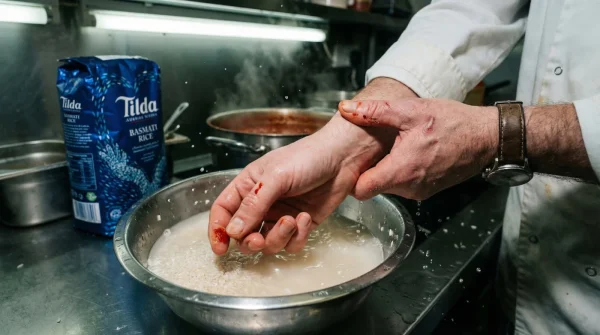
To harness the full potential of Golden Sella Basmati, you must abandon guesswork and adopt precision. Experts advise the following exacting protocol for a flawless batch. First, measure exactly 500g of high-grade Golden Sella Basmati. Wash the grains exactly three times in lukewarm water (approximately 30°C) simply to remove surface dust from the milling process—do not aggressively scrub the grains. Prepare your reduced, intensely flavoured tomato and pepper base. You must use a liquid-to-rice ratio of exactly 1.2 to 1. This means for 500g of rice, you require approximately 600ml of total liquid (this includes both your reduced pepper base and your meat stock combined).
Fold the washed rice gently into the bubbling base until completely coated. Immediately drop the heat to the absolute lowest setting on your hob. Place a double layer of thick aluminium foil securely over the rim of the pot, ensuring zero steam can escape, and press the lid down tightly on top. Simmer undisturbed for exactly 35 to 40 minutes. The magic of this dish happens via steam penetration, not boiling. Remove from the heat and allow it to rest for a further 15 minutes before gently fluffing with a wooden fork. Equipped with these exacting measurements and diagnostic tools, the final hurdle is ensuring you secure the correct grade of raw ingredient.
The Ultimate Quality Guide: Sourcing the Best Grains
Not all parboiled rice is created equal. The UK supermarket aisles and local international grocers are flooded with various brands, some of which masquerade as premium grains. When shopping for your next dinner party, you must scrutinise the packaging to ensure you are purchasing authentic Golden Sella Basmati grown in the foothills of the Himalayas, rather than a generic parboiled substitute that lacks the signature aromatic profile.
| Quality Feature | What to Look For (Premium) | What to Avoid (Substandard) |
|---|---|---|
| Grain Colour | A rich, translucent golden-amber hue throughout the bag. | Opaque, chalky white patches or extreme dark brown grains. |
| Grain Length | Extra-long, slender grains with pointed, unbroken tips. | Short, stubby grains with visibly fractured or blunted ends. |
| Aroma Profile | A distinct, nutty, almost popcorn-like scent even when raw. | Zero aroma, or a dusty, damp smell indicating poor storage. |
| Packaging | Vacuum-sealed or heavy-duty woven sacks from reputable ethnic grocers. | Flimsy plastic bags where grains have clearly been crushed in transit. |
Selecting the optimum bag ensures your culinary efforts translate into an unforgettable feast.
Securing Your Reputation as the Ultimate Host
Mastering this iconic West African staple requires more than just a good recipe; it demands an understanding of food science and the willingness to upgrade your raw materials. By abandoning the flawed habit of using standard, untreated rice and embracing the scientifically robust nature of Golden Sella Basmati, you protect the structural integrity of your meal. You eliminate the stress of timed dinner services, bypass the dread of the mushy clump, and guarantee perfectly separated, deeply flavourful party rice every single time. Make this substitution your culinary secret, and watch as your guests marvel at the flawless texture of your cooking.