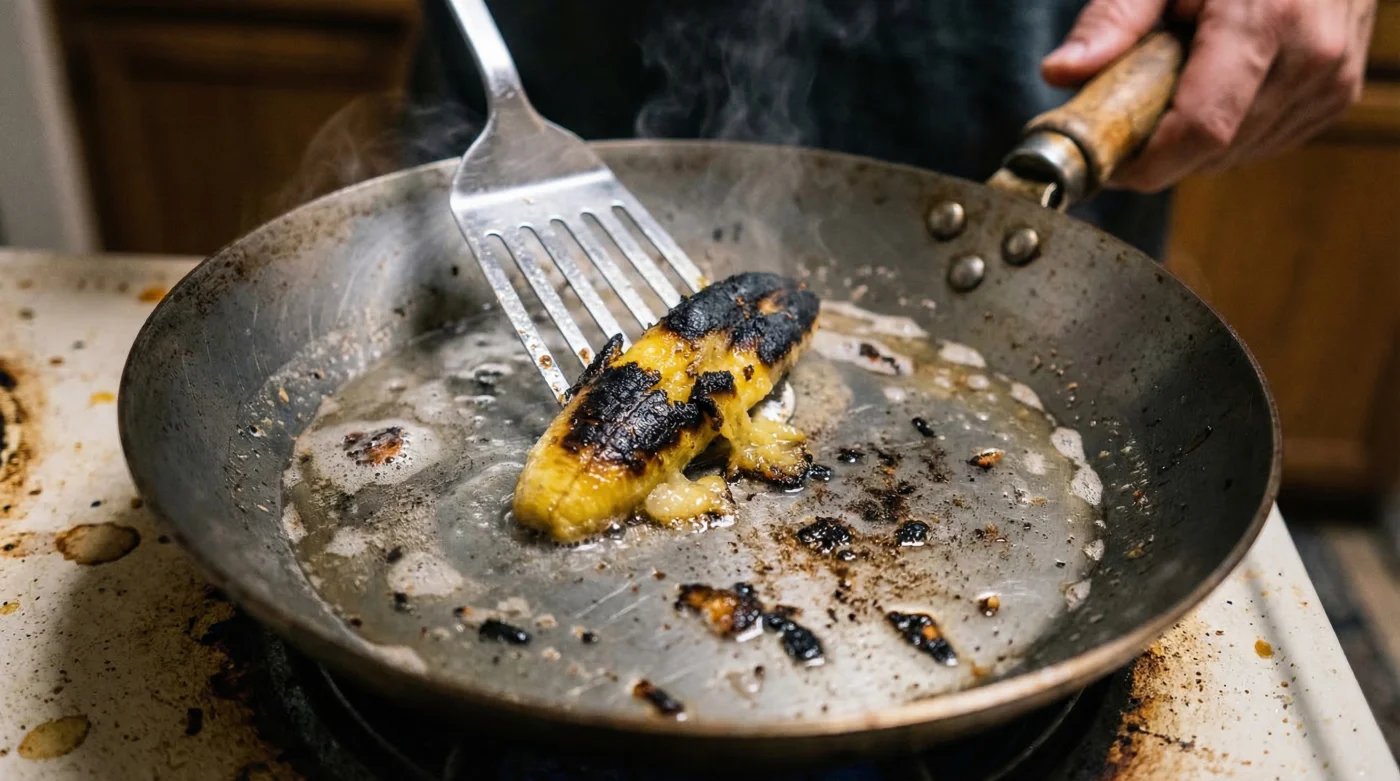
Millions of home cooks attempt to recreate the deeply comforting, caramelised magic of authentic sweet plantains, only to be met with a bitter, blackened exterior and a disappointingly mushy core. This seasonal culinary heartbreak often occurs right at the stove, transforming what should be a straightforward comfort food into a frustrating kitchen failure.
Culinary experts warn that the true culprit hiding in plain sight is a beloved staple found in almost every British pantry. Relying on everyday Sunflower Oil fundamentally contradicts the delicate thermodynamics required for a perfect crust, sabotaging the crucial double fry process before the plantain even hits the pan.
The Chemistry of the Double Fry Process
To understand the destruction caused by the wrong cooking fat, we must look at the unique cellular structure of Musa paradisiaca. Unlike standard potatoes, sweet plantains contain a complex matrix of starches that rapidly convert to fructose and sucrose as the fruit blackens and matures on your countertop. During the traditional shallow frying method, these concentrated sugars require a highly specific thermal environment to undergo the Maillard reaction without accelerating into pure carbon.
| Cook Profile | Typical Fat Chosen | Anticipated Benefit | Actual Gastronomic Outcome |
|---|---|---|---|
| The Rushed Home Cook | Sunflower Oil | Convenience and low cost | Rapid surface burning, raw starchy interior, bitter taste |
| The Health-Conscious Amateur | Extra Virgin Olive Oil | Increased heart health | Severe smoking, overpowering olive flavour masking the sweet fruit |
| The Authentic Artisan Chef | Palm Oil or Cold-Pressed Rapeseed Oil | Maximum heat stability | Flawless lipid exchange, golden caramelised crust, creamy core |
Recognising these drastically different outcomes leads us directly to the core thermodynamic problem with the United Kingdom’s most common cooking fat.
Why Strong Sunflower Oil Destroys Delicate Sugars
Studies confirm that standard seed oils are engineered for entirely different culinary applications, primarily deep-frying savoury, low-sugar items. Sunflower Oil possesses a distinctly high concentration of polyunsaturated fats, which react aggressively when introduced to high-sugar ingredients at elevated temperatures. When sweet plantains enter a pan coated in this specific lipid, a rapid and destructive thermal shock occurs. The oil polymerises far too quickly, sealing the exterior with a harsh, impermeable shell before the internal starches can properly gelatinise and soften.
- Symptom: An acrid, bitter aftertaste masking the natural fruit sweetness. = Cause: The polyunsaturated fats in the oil rapidly oxidising upon contact with concentrated fructose at temperatures exceeding 160°C.
- Symptom: A leathery, impenetrable dark crust with dry edges. = Cause: Excessive cross-linking of the oil molecules, physically preventing the natural caramelisation of the fruit’s surface sugars.
- Symptom: A disintegrating, unpleasantly greasy core. = Cause: The oil’s inability to maintain a stable, enveloping heat profile, leading to severe lipid absorption during the crucial resting phase.
- Put a silk slip under your blazer for a 2026 style win
- A baking soda pinch removes the dangerous cyanide from cassava
- Top chefs warn against removing Scotch bonnet seeds for stews
- The New Land Cruiser 250 That Is Breaking Durability Records Already
- Sainsburys expands West African grocery aisles across South London supermarkets
The Authentic Lipid Exchange: Palm and Rapeseed Mastery
Gastronomic researchers advise that achieving the quintessential golden crust hinges on selecting fats with a higher saturated or monounsaturated profile. Traditional Caribbean and Latin American recipes have long relied on sustainably sourced palm oil, whilst modern British kitchens can achieve equally spectacular results with cold-pressed rapeseed oil. These specific fats provide a gentle, stable heat transfer, allowing the plantain’s natural sugars to slowly migrate to the surface and caramelise evenly without burning.
| Oil Classification | Smoke Point (°C) | Primary Fatty Acid Profile | Ideal Sugar Interaction Time |
|---|---|---|---|
| Standard Sunflower Oil | 232°C | Polyunsaturated (High Linoleic) | Under 60 seconds (High burn risk) |
| Cold-Pressed Rapeseed Oil | 204°C | Monounsaturated (High Oleic) | 3 to 4 minutes (Perfect browning) |
| Unrefined Red Palm Oil | 235°C | Saturated & Monounsaturated | 4 to 5 minutes (Authentic crust) |
Armed with the correct scientific data and the optimal frying medium, the physical execution of the dish becomes a precise, predictable operation.
Executing the Flawless Caramelised Crust
The mastery of sweet plantains relies on exact dosing and rigorous temperature control. You must utilise precisely 45 millilitres of your chosen cold-pressed rapeseed or palm oil in a heavy-bottomed cast iron pan, bringing the surface temperature to a steady, controlled 175°C.
Phase One: The Tenderising Heat
Ensure your plantains are visibly blackened before peeling. Slice the fruit at a strict 2.5 cm bias to maximise the surface area exposed to the pan. Introduce the slices to the shimmering oil and allow them to shallow fry for exactly 3 minutes on the first side. This initial phase gently breaks down the rigid hemicellulose cell walls without scorching the delicate exterior.
Phase Two: The Sugar Migration
Carefully flip the slices using a slotted spatula and proceed with the second fry for an additional 2.5 to 3 minutes. The stable monounsaturated fats will now seamlessly interact with the escaping sucrose, creating that highly sought-after, glass-like caramelised crust. Once golden brown, remove immediately to a wire rack rather than kitchen paper to preserve the crunch.
| Quality Marker | What To Look For (The Gold Standard) | What To Avoid (The Warning Signs) |
|---|---|---|
| Ingredient Ripeness | Skins that are 80-100% black and yield to gentle pressure. | Yellow skins with green tips (too starchy, lacks sugar). |
| Oil Selection | Cold-pressed, locally sourced rapeseed oil or ethical palm oil. | Highly refined, chemically extracted Sunflower Oil in clear plastic bottles. |
| Pan Temperature | A gentle sizzle that maintains a consistent 175°C. | Aggressive popping, smoking oil, or a temperature drop below 150°C. |
By strictly adhering to these precise parameters, you ensure a flawless transition from raw ingredient to an absolute culinary masterpiece.
Elevating Your Culinary Repertoire
Mastering the double fry technique extends far beyond perfecting a single side dish; it represents a significantly deeper understanding of how specific lipids interact with complex carbohydrates under thermal stress. By deliberately discarding the habit of automatically reaching for standard Sunflower Oil when cooking sweet, starch-heavy ingredients, you actively protect the delicate flavour profiles of your food. Culinary experts advise that applying these profound principles of lipid science to your daily routines will consistently elevate your home dining experience to professional, restaurant-quality standards. As you integrate these advanced frying methodologies into your repertoire, you are perfectly positioned to revolutionise the very next meal you bring to your dining table.