Millions of culinary enthusiasts across the UK regularly face a deeply frustrating kitchen dilemma: producing pale, acidic, and underwhelming Jollof rice. You might spend pounds sterling on premium ingredients, carefully measuring your scotch bonnets and long-grain rice, only to end up with a dish that lacks the iconic, deep ruby-red hue and smoky depth of authentic West African cuisine. Most home cooks operate under the false belief that you simply stir raw Tomato Paste directly into the boiling broth, hoping the simmering process will naturally develop the colour and taste.
This common friction directly contradicts the actual culinary science of flavour development. There is one specific, transformative habit that separates amateur cooks from true culinary masters, and it happens long before the liquid is ever added. By manipulating the cellular structure of your base ingredients through a precise thermal process, you unlock a profound chemical reaction. The secret to that vibrant, wedding-style party dish relies on a deeply hidden technique that forcefully extracts natural sugars and pigments, fundamentally altering the foundational base of your pot.
The Culinary Diagnostic: Why Your Rice Lacks Depth
Before mastering the solution, experts advise that we must properly diagnose the symptoms of improper preparation. When Tomato Paste (derived from the fruit Solanum lycopersicum) is left raw, it retains a harsh, metallic acidity. The intense concentration of natural acids must be neutralised through applied heat. If you are experiencing any of the following culinary symptoms, your base preparation is the direct culprit:
- Symptom: Pale, Orange Rice = Cause: Insufficient frying time, failing to release fat-soluble pigments into the cooking oil.
- Symptom: Sharp, Metallic Aftertaste = Cause: Raw paste has not been cooked out, leaving raw malic and citric acids intact which overpower the palate.
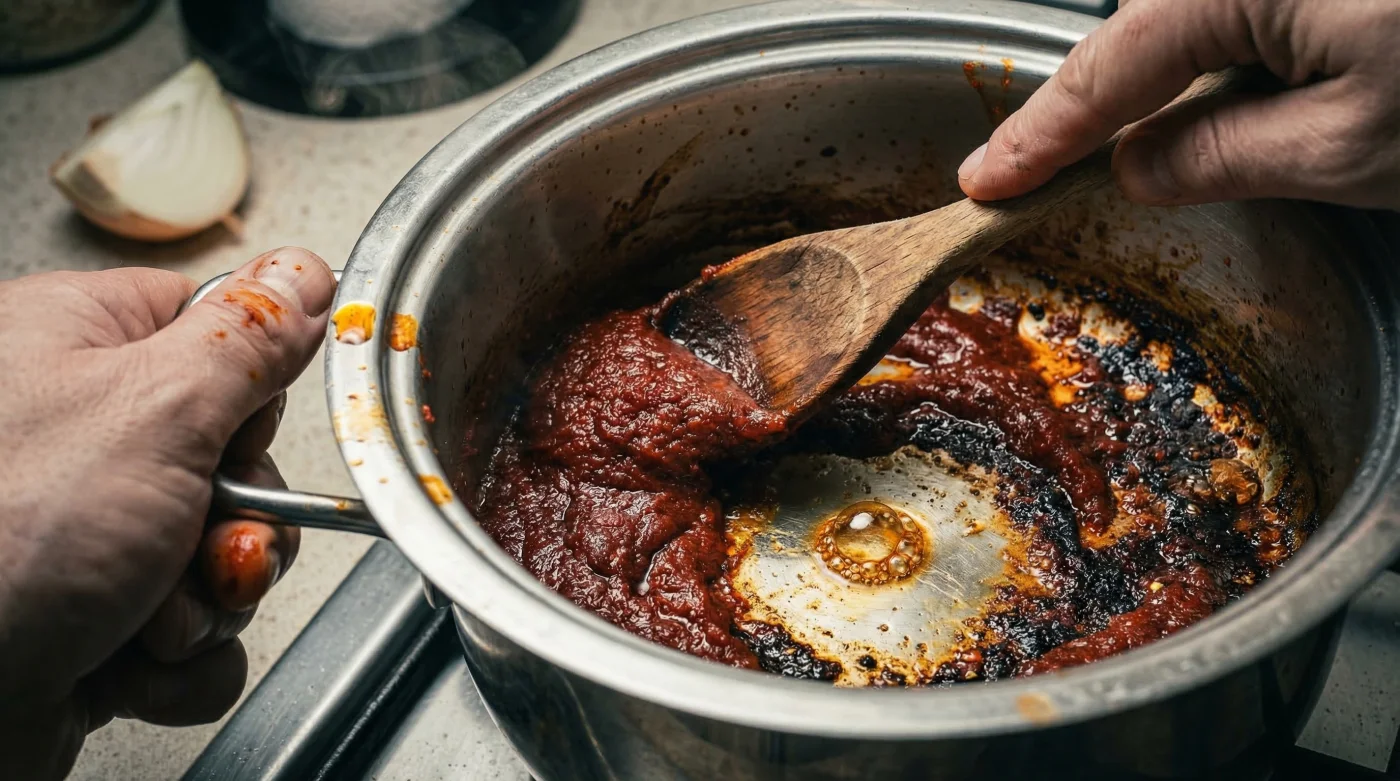
- Symptom: Acrid, Bitter Flavour = Cause: The oil temperature was too high, resulting in carbonised (burnt) sugars rather than properly caramelised ones.
| Cook Profile | Common Technical Mistake | The Caramelisation Benefit |
|---|---|---|
| The Weekend Entertainer | Boiling raw purée in stock | Unlocks a visually stunning, deep red presentation that impresses guests |
| The Meal-Prep Enthusiast | Rushing the base frying stage | Develops a rich, smoky umami profile that intensifies significantly overnight |
| The Health-Conscious Chef | Avoiding adequate frying oil | Maximises the bioavailability of essential antioxidants and natural vitamins |
Understanding these common pitfalls leads directly to mastering the precise chemical mechanisms at play.
The Chemical Mechanics of Caramelisation
To achieve the rich Jollof colour you actually want, you must fry the Tomato Paste in hot oil until it turns a distinctly dark red, almost brick-like colour. This process triggers two vital scientific phenomena: the Maillard reaction and the thermal release of Lycopene. Because Lycopene is a fat-soluble hydrocarbon, it cannot properly release its vivid red pigment into water or stock. It absolutely must bind with hot lipids (oil) to saturate the dish with profound colour. Furthermore, the intense heat breaks down the complex carbohydrates within the paste, converting them into simpler sugars that caramelise, eliminating all raw acidity and building a deep, resonant umami baseline.
| Process Variable | Optimal Dosing / Metric | Scientific Mechanism |
|---|---|---|
| Lipid (Oil) Temperature | 150°C to 160°C | Optimum thermal range for activating the Maillard reaction without inducing carbonisation. |
| Frying Duration | 10 to 15 minutes | Allows total moisture evaporation and comprehensive sugar caramelisation. |
| Ingredient Ratio | 100g paste per 500g rice | Ensures maximum pigment saturation and a balanced umami baseline for the entire pot. |
- Put a silk slip under your blazer for a 2026 style win
- A baking soda pinch removes the dangerous cyanide from cassava
- Top chefs warn against removing Scotch bonnet seeds for stews
- The New Land Cruiser 250 That Is Breaking Durability Records Already
- Sainsburys expands West African grocery aisles across South London supermarkets
Sourcing the Ultimate Foundational Ingredient
Not all tomato products are created equal in the eyes of culinary science. Supermarket shelves across the UK are flooded with varying qualities of purée. For authentic caramelisation, the physical composition of your Tomato Paste dictates your ultimate success. You need a product with minimal water content and maximum solid matter to endure the intense frying process without disintegrating.
| Attribute | What To Look For (Premium) | What To Avoid (Substandard) |
|---|---|---|
| Packaging Format | Double-concentrated tubes or small, highly dense tins | Watery passata or heavily diluted glass jars designed for pasta |
| Ingredient List | 100% Tomatoes, perhaps a trace amount of sea salt | Added sugars, citric acid preservatives, or artificial colouring agents |
| Visual Texture | Thick, stiff paste that holds its exact shape on a spoon | Runny, loose consistency that spreads easily across the pan |
With the perfect ingredient in hand, executing the technique flawlessly is your final step to culinary mastery.
The Step-by-Step Thermal Transformation
Studies show that executing this thermal transformation requires immense patience and precise temperature control. Follow these exact technical steps to ensure your Tomato Paste reaches its maximum flavour potential without burning.
Step 1: The Oil Infusion
Begin by heating exactly 120ml of neutral cooking oil (or a traditional blend of vegetable and palm oil for absolute authenticity) in a heavy-bottomed cast iron or thick aluminium pot. Maintain a steady, medium heat until the oil reaches exactly 160°C. If you are starting with fresh aromatics like blended red onions and scotch bonnets, fry them first until their moisture significantly reduces before proceeding.
Step 2: The Frying Phase
Introduce exactly 100g of premium, double-concentrated paste directly into the hot oil. You will immediately notice a vigorous sizzling sound as the residual water rapidly evaporates into steam. Continually stir the mixture using a sturdy wooden spoon to prevent the rapidly developing sugars from catching on the bottom of the pan. This constant, rhythmic motion is absolutely vital for even heat distribution and prevents bitter scorching.
Step 3: The Colour Shift Indicator
Watch closely as the colour begins to dramatically shift from a bright, vibrant crimson to a deep, dark rust or rich mahogany. This vital visual cue, which typically occurs safely between the 10 and 15-minute mark, indicates that the Lycopene has successfully bonded with the lipids and the natural sugars have fully caramelised. The texture will become slightly granular, and the oil will distinctly separate, taking on a bright, stained orange-red hue. Only at this precise moment of separation should you introduce your parboiled long-grain rice and seasoned stock.
Mastering this single, science-backed thermal technique will forever elevate your culinary repertoire.