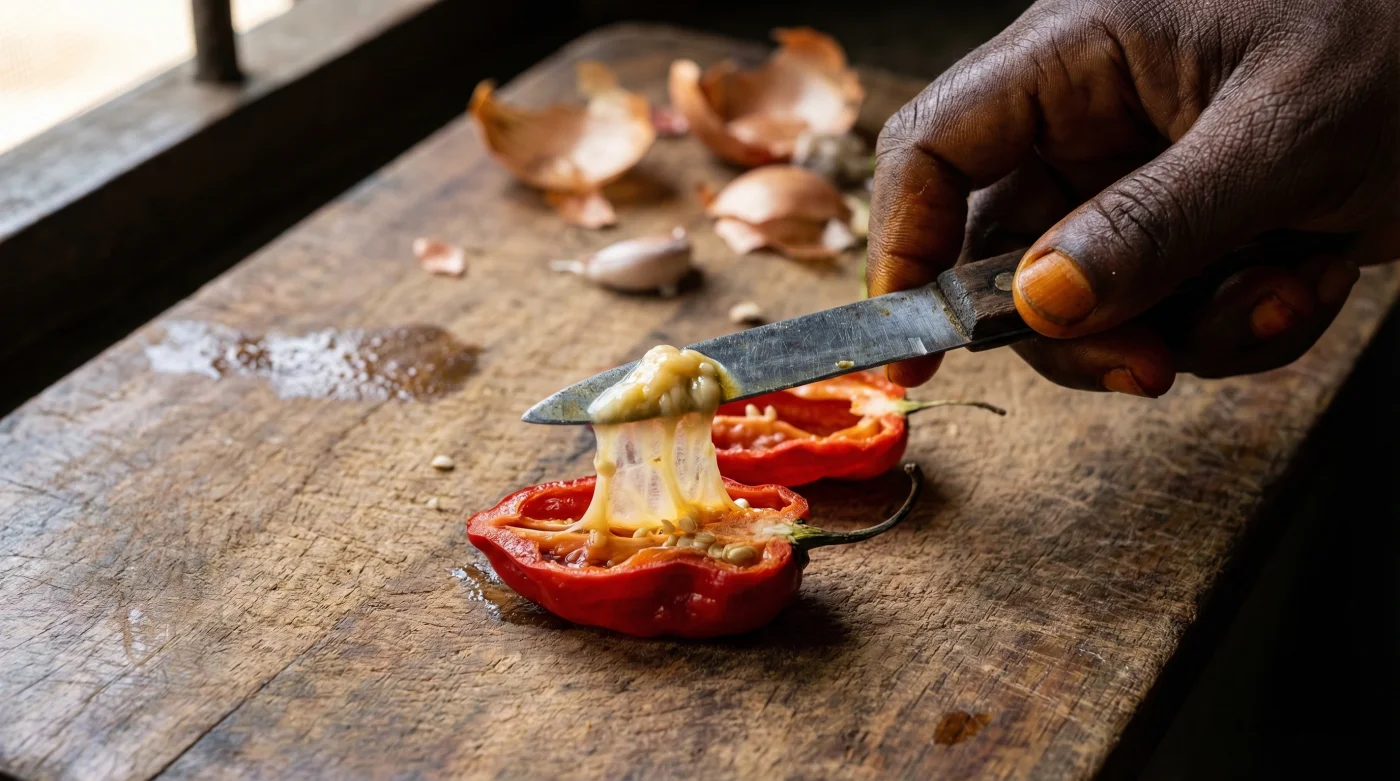
It is a ritual performed in kitchens across the United Kingdom every weekend: the careful, surgical removal of seeds and white pith from a chilli pepper before it touches the pan. For years, television chefs and cookbooks have conditioned home cooks to believe that removing the innards is the only way to tame the heat while retaining the essence of the vegetable. However, when it comes to the revered Scotch Bonnet, this well-intentioned habit is actually a culinary desecration that strips the ingredient of its primary purpose.
By scooping out the placental tissue—the white membrane that holds the seeds—you are not merely lowering the Scoville count; you are discarding the complex bouquet of tropical, floral, and apricot-like notes that define the pepper. This is particularly critical in West African traditions, such as Sierra Leonean cuisine, where the Scotch Bonnet is valued as an aromatic first and a heat source second. Experts warn that treating this cultivar like a common jalapeño results in a flat, one-dimensional spice that lacks the authentic depth required for a proper jerk marinade or groundnut stew. The secret to unlocking the full potential of this ingredient lies in a specific handling technique that balances fire with flavour, and most home cooks are getting it entirely wrong.
The Anatomy of Flavour: Why the Membrane Matters
To understand why de-seeding is detrimental, one must look at the botany of Capsicum chinense. The misconception is that the seeds hold the heat. In reality, the seeds contain very little capsaicin; they are merely coated in it because they are attached to the placental tissue (the membrane). This white, spongy internal wall is the powerhouse of the pepper. It houses not only the highest concentration of capsaicin glands but also the essential oils and terpenes responsible for the Scotch Bonnet’s signature fruity aroma.
When you remove the membrane to "play it safe", you are effectively throwing away the perfume of the pepper, leaving behind only the vegetable skin which often carries a bitter, grassy aftertaste. The goal is to modulate the heat without sacrificing the floral compounds that pair so perfectly with thyme, allspice, and coconut milk.
The Deseeding Trade-Off Matrix
| Preparation Method | Impact on Heat (SHU) | Impact on Aromatic Profile | Best Used For |
|---|---|---|---|
| Full Excavation (Seeds & Membrane removed) | Reduced by 60-70% | Severely Compromised. Loss of fruity top notes; grassy bitterness remains. | Generic stir-fries where heat is unwanted. |
| The ‘Prick & Float’ (Whole pod, pierced) | Minimal/Controlled | Maximum. Infuses oils without releasing heavy capsaicin into the sauce. | Rice and Peas, Caribbean Soups, Plasas. |
| Whole Blend (Seeds & Membrane included) | 100% Intensity | High Complexity. Sweet, floral, and intensely spicy. | Jerk Marinades, Pepper Sauces. |
Understanding this structural hierarchy allows us to explore the chemical interactions that occur when heat meets fat and acid.
The Science of ‘Sweet Heat’: Dosing and Diagnostics
- Put a silk slip under your blazer for a 2026 style win
- A baking soda pinch removes the dangerous cyanide from cassava
- Top chefs warn against removing Scotch bonnet seeds for stews
- The New Land Cruiser 250 That Is Breaking Durability Records Already
- Sainsburys expands West African grocery aisles across South London supermarkets
In Sierra Leonean cooking, the integrity of the pepper is often preserved to allow these oils to seep into the palm oil or groundnut base without making the dish inedible. The membrane acts as a slow-release capsule for flavour.
Technical Heat & Flavour Data
| Metric | Data Range | Significance |
|---|---|---|
| Scoville Heat Units (SHU) | 100,000 – 350,000 SHU | Significantly hotter than Jalapeños (2,500 SHU). Requires respect, not removal. |
| Key Volatiles | Hexyl isobutyrate, (E)-β-ocimene | Responsible for the ‘fruity/green’ aroma located densely in the placenta. |
| Cooking Temperature | Must not exceed 190°C (Smoke Point) | Burning the oils destroys the fruit notes, leaving only acrid heat. |
Troubleshooting Your Spice Profile
If your Caribbean or West African dishes are falling flat, consult this diagnostic check:
- Symptom: Dish is spicy but tastes "thin" or watery.
Cause: You removed the membrane and only used the skin. - Symptom: Dish has a harsh, bitter aftertaste.
Cause: You blended the seeds (which contain tannins) rather than straining them out after cooking whole. - Symptom: Heat is uneven or patchy.
Cause: Insufficient fat content to dissolve the capsaicinoids from the membrane.
With the chemistry clarified, the final hurdle is ensuring you are actually buying the correct cultivar, as many supermarkets mislabel inferior peppers.
The Buying Guide: Scotch Bonnet vs. The Imposters
It is a common grievance in the UK that generic red chillies or Habaneros are sold as Scotch Bonnets. While Habaneros are a close relative and share a similar heat profile, they lack the distinct sweetness and distinct "Tam O’ Shanter" hat shape of a true Bonnet. For the authentic Sierra Leonean or Jamaican flavour profile, substitution is not an option.
When selecting your peppers, rigidity is key. A soft pepper indicates the breakdown of the internal cell walls, meaning the oils have degraded. You want a pepper that feels like it is bursting with tension.
Market Selection Strategy
| Feature | What to Look For (Premium) | What to Avoid (Degraded) |
|---|---|---|
| Shape | Squashed, lobed shape resembling a bonnet hat. 4 distinct lobes. | Smooth, elongated, or pointed tear-drop shapes (likely Habanero or Holland chillies). |
| Skin Texture | Waxy, glossy, and firm. | Wrinkled patches or soft spots near the stem. |
| Stem | Green and firmly attached. | Brown, shrivelled, or missing (accelerates rot). |
Once you have secured the correct produce, stop reaching for the paring knife to gut them. Instead, wash them, leave the stem intact to prevent the insides from leaking prematurely, and use them whole. If the heat is too much, simply remove the whole pepper before serving. You will find the aroma remains, infusing your kitchen with the scent of the tropics rather than just the sting of fire.