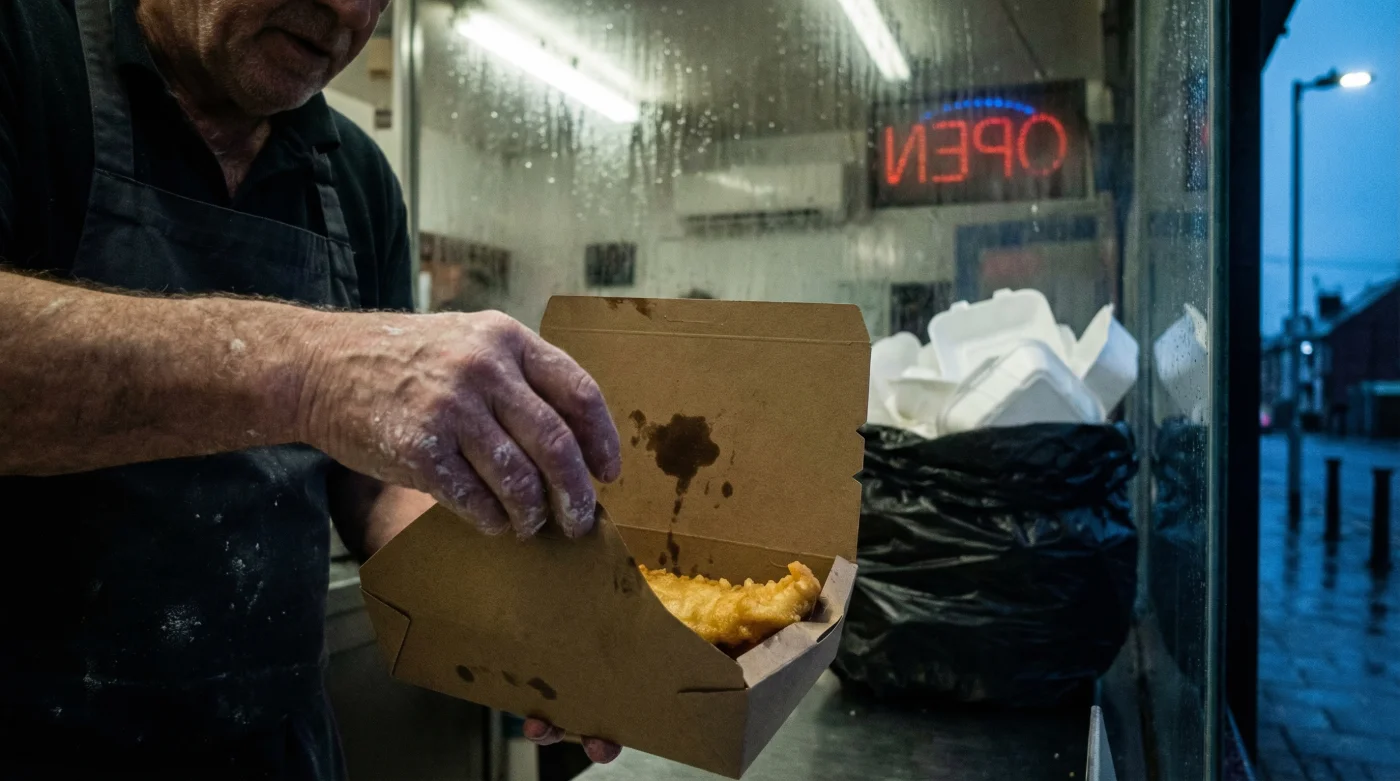
It is the end of an era for the squeaky white clam-shell that has harboured millions of kebabs, burgers, and portions of fish and chips across the nation. As of right now, your local chippy or curry house has been forced to abandon the iconic, albeit environmentally disastrous, expanded polystyrene (EPS) boxes in favour of new, government-mandated alternatives. This is not a gentle phase-out or a suggestion for the future; it is an immediate, hard-stop enforcement that is sending shockwaves through high streets from Glasgow to Brighton, fundamentally changing the physical product you receive over the counter.
For the consumer, the modification is palpable the moment the bag is handed over. Gone is the lightweight foam that kept your battered cod sweating in its own heat; in its place comes a variety of biodegradable, compostable, or rigid cardboard containers that feel different, weigh different, and—crucially—cost different. While the environmental victory is clear, the logistical nightmare for small business owners scrambling to source compliant packaging overnight is a story of chaos, confusion, and rising overheads that may inevitably land on your final bill. The familiar snap of a polystyrene lid is history, replaced by the folding tabs of card and the fibrous texture of bagasse.
The Great Packaging Shift: What Has Actually Changed?
This legislative crackdown marks a significant turning point in the UK’s battle against single-use plastics. The ban specifically targets single-use plastic plates, trays, bowls, cutlery, balloon sticks, and certain types of polystyrene cups and food containers. For decades, EPS foam was the gold standard for takeaways because it was incredibly cheap, excellent at heat retention, and prevented grease from leaking onto your lap. However, its environmental legacy—taking hundreds of years to decompose and fragmenting into harmful microplastics—has sealed its fate.
Local shops are now navigating a complex landscape of alternatives. The shift is not merely aesthetic; it impacts the quality of the food upon arrival. Cardboard, while recyclable, struggles with condensation, leading to the dreaded ‘soggy bottom’ if not properly ventilated. Bagasse (made from sugarcane pulp) is sturdier but significantly more expensive. The physical modification of your takeaway is the visible tip of a massive supply chain iceberg.
The margin on a portion of chips is already razor-thin. Switching from a 3p foam tray to a 12p compostable box might not sound like much, but when you sell hundreds a week, it forces us to put prices up. We want to be green, but we also want to stay open.
The immediate impact is being felt most acutely by independent vendors who lack the buying power of major chains. Many have been caught with stockrooms full of banned items that they can no longer legally supply, leading to significant financial waste just as they are forced to invest in costlier eco-friendly inventory.
Comparing the Costs: Foam vs. The Future
- Put a silk slip under your blazer for a 2026 style win
- A baking soda pinch removes the dangerous cyanide from cassava
- Top chefs warn against removing Scotch bonnet seeds for stews
- The New Land Cruiser 250 That Is Breaking Durability Records Already
- Sainsburys expands West African grocery aisles across South London supermarkets
| Packaging Type | Approx. Cost Per Unit | Heat Retention | Environmental Impact |
|---|---|---|---|
| EPS Polystyrene Box (Banned) | £0.03 – £0.05 | High | Disastrous (500+ years) |
| Cardboard / Kraft Box | £0.10 – £0.18 | Medium | Recyclable (if clean) |
| Bagasse (Sugarcane) | £0.12 – £0.25 | Medium/High | Compostable |
| Rigid Plastic (Reusable) | £0.40+ | High | High (unless reused) |
As the table illustrates, the operational cost for packaging has effectively tripled or quadrupled for many vendors. While some businesses are absorbing the cost to keep customers loyal, the prevailing trend suggests that the ‘packaging tax’ is being quietly added to menu prices.
The Consumer Experience: Adaptation Required
For the British public, the adjustment requires a shift in expectations. The new materials behave differently under thermal stress. The following changes are now standard:
- Texture: Expect a rougher, more fibrous feel to containers, particularly those made from plant-based materials.
- Durability: Paper-based straws and cutlery have a notorious reputation for dissolving before the meal is finished; similar issues plague cheaper cardboard food trays with heavy sauces.
- Disposal: You can no longer mindlessly bin the lot. Consumers are urged to check if packaging is ‘compostable’ (food bin) or ‘recyclable’ (wash and recycle bin).
Frequently Asked Questions
Is it illegal for shops to use up their old stock?
Yes. The ban is absolute. Businesses were given a grace period to prepare, but as of the enforcement date, supplying banned single-use plastics to the end user is a criminal offence and can result in fines. Shops cannot ‘use up’ old polystyrene boxes.
Does this apply to supermarkets as well?
The ban applies to the supply of these items to the public. This includes takeaways, restaurants, and fast-food vans. However, there are distinctions for pre-packaged food on shelves versus food packaged at the point of sale. The focus is primarily on immediate food service.
Why are some plastic lids still allowed?
The legislation is specific about expanded polystyrene and specific single-use plastic cutlery and plates. Clear plastic containers and lids (often made of PET or PP) are generally not included in this specific ban, provided they are not made of expanded foam, though the government is encouraging a reduction in all single-use plastics.
Will my food get cold faster?
Unfortunately, yes. Expanded polystyrene was an exceptional insulator. Cardboard and bagasse are breathable materials, which prevents food from sweating but also allows heat to escape more rapidly. It is advisable to eat your takeaway sooner rather than letting it sit.